
A premier curation of museum-quality glass, fine stoneware, silver, brass, and porcelain.
New Arrivals This Week
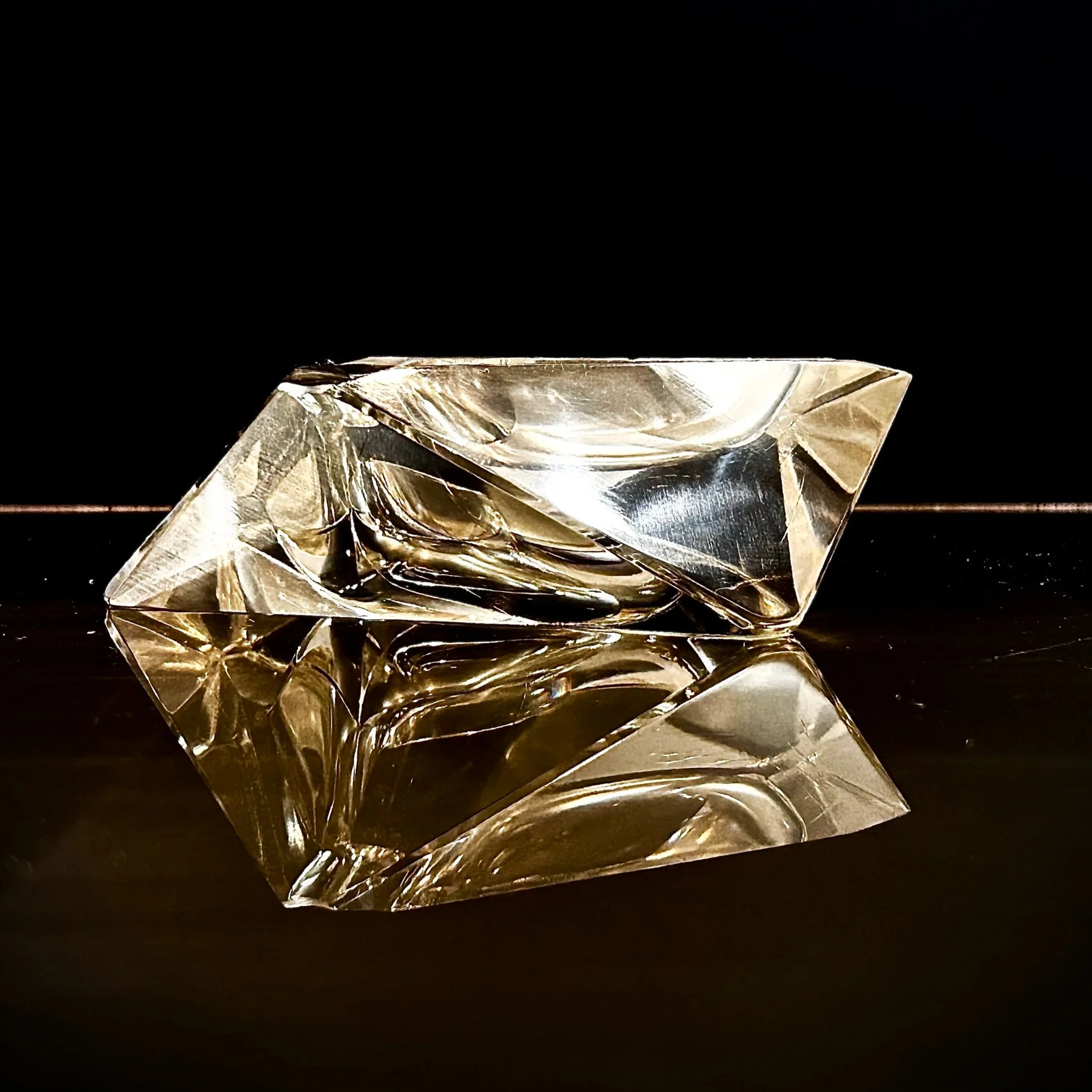
This exquisite sculptural object exemplifies the rigorous geometric precision of mid-century Italian design. Executed in heavy, high-clarity crystal, the piece utilizes a multifaceted, triangular form that engages in a complex play of refraction, transforming light into an internal landscape. Its substantial weight and refined, architectural silhouette anchor a room with a sophisticated presence that transcends utility.
The Design Aesthetic
Consistent with the iconic aesthetic emerging from the Murano studios during the 1960s, this work reflects a dedication to minimalist, geometric purity. The clarity of the material and the sharp, planar execution are hallmarks of the period's most sought-after refractive sculptures. Designed as both a functional centerpiece and a contemplative art object, its low profile and triangular footprint make it a compelling addition to a curated office or a modernist coffee table.
Specifications
Dimensions: 5” W x 5” D x 1.375” H
Weight: 1.5 lbs
Material: High-Lead Crystal / Optical Glass
Origin: Italian School (Attributed to the manner of Flavio Poli)
Period: Mid-Century Modern
Condition & Provenance
Clinical and direct. The glass is in excellent condition with high transparency. One corner features a singular, minute chip as shown in documentation. Minimal surface wear consistent with age and placement; no clouding or significant scratching observed.
This exceptional work of heavy art glass commands attention through its rigorous geometric precision and remarkable interaction with light. The piece utilizes a multifaceted, triangular exterior that creates a complex internal landscape of refraction, transforming the object into a high-stakes sculptural centerpiece. Its substantial weight and high-clarity material ensure it anchors a room with a sophisticated, architectural presence that transcends utility.
Dimensions & Weight
Height: 1.375 inches
Width / Diameter: 5 inches
Depth / Base Diameter: 5 inches (Equilateral)
Weight: 1.5 lbs
Authenticity & Construction
This piece is executed in high-lead crystal or exceptionally clear optical glass, hand-cut and polished to achieve its razor-sharp edges and flat planes. The construction relies on the "cold-work" process, where a solid block of glass is ground and polished to create its final form—a labor-intensive method that results in far superior light refraction compared to molded glass.
Placement
The low profile and triangular footprint make this an ideal addition to a brutalist coffee table, a minimalist executive desk, or a tiered shelving unit where it can serve as a sophisticated catchall for personal effects or exist purely as a refractive sculpture
Note on Material Integrity: Under ultraviolet illumination, the crystal exhibits a distinctive and vibrant fluorescence. This optical phenomenon is a direct result of the specific mineral composition—typically manganese—employed in glass formulations during the mid-20th century. This reaction serves as a compelling marker of authenticity, confirming the piece's period-accurate composition and distinct material character.
Standard Attribution Note: This object is presented in the stylistic manner of 1960s Italian glass production, specifically echoing the geometric designs associated with the studios of Murano. While the piece is unsigned and the specific artisan remains undocumented, its material quality, weight, and sculptural execution are characteristic of the highest caliber of mid-century Venetian craftsmanship.
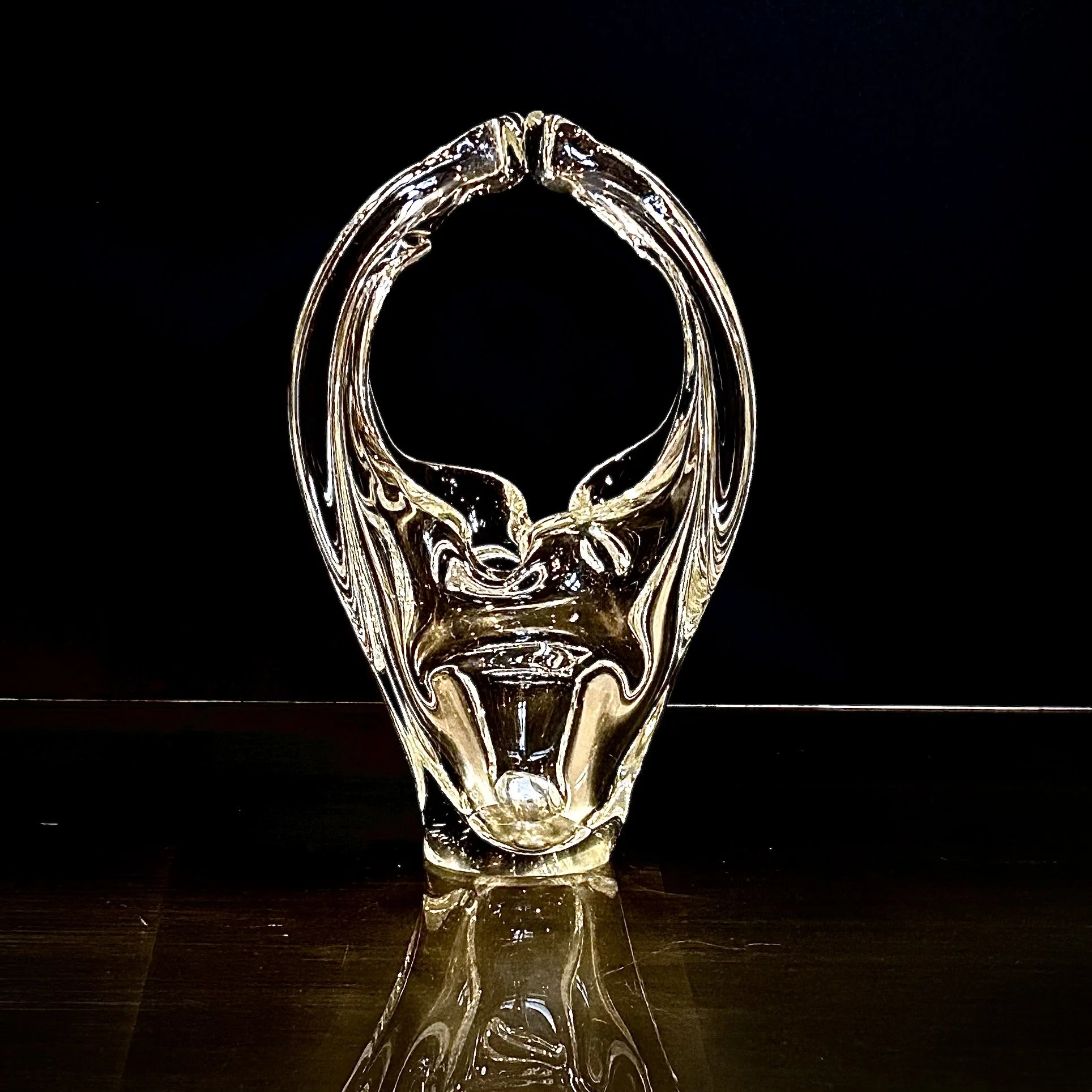
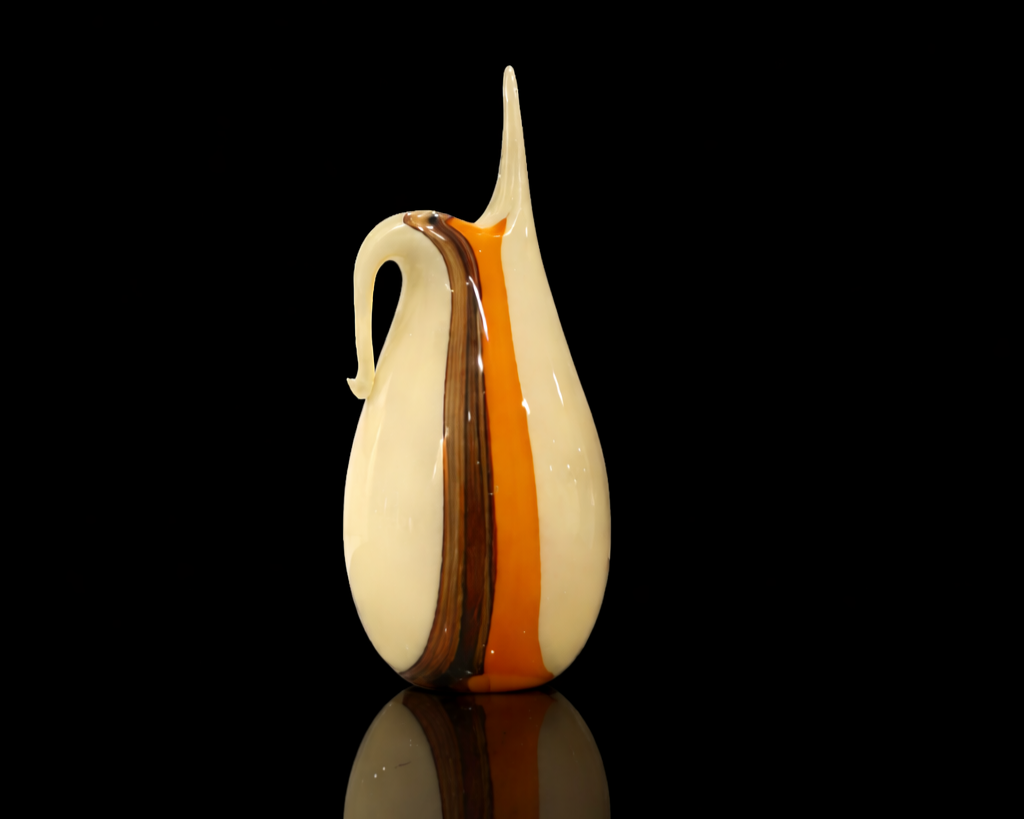
A highly sculptural clear art glass vessel defined by its fluid, looping silhouette and controlled internal movement. The form rises in a continuous arc, creating a striking open center that interacts dynamically with light and surrounding space. Subtle internal striations and suspended bubbles enhance depth, while the polished surfaces produce strong reflective and refractive effects. Under UV light, the glass exhibits a distinct orange fluorescence, adding an additional layer of visual interest.
Attribution & Period
Stylistically aligned with Murano glass production, Italy, 1960s. The freeform organic shaping, controlled internal flow patterns, and polished pontil base are consistent with mid-century Venetian studio techniques. No factory mark observed; attribution remains visual rather than documented.
Dimensions & Weight
Height: 7.5 in
Width / Diameter: 3.5 in
Depth / Base Diameter: 4 in / 2 in
Weight: 1.73 lbs
Condition
Excellent condition. No chips or cracks observed. Minor surface scratches to the base consistent with light shelf wear. Internal inclusions and air bubbles are inherent to the making process.
Authenticity & Construction
Hand-blown art glass formed using freeform hot-working techniques, allowing the molten material to be shaped into an asymmetrical, continuous loop. The clarity, internal movement, and controlled thickness variation reflect skilled studio craftsmanship typical of mid-century Italian glassmaking.
Placement
Ideal as a standalone sculptural accent on a console, credenza, or pedestal. Performs particularly well in environments with directional lighting, where its transparency and internal structure can be fully appreciated. Suitable for modern, minimalist, and architectural interiors.
STANDARD ATTRIBUTION & VALUE DISCLOSURE
This piece is described to the best of current scholarly and market knowledge. Any maker or regional attribution is based on visual analysis, materials, construction techniques, and documented stylistic comparisons. As with many MCM and antique design objects, definitive attribution may not be possible without original labels or factory records. Pricing reflects condition, quality, decorative appeal, and current collector demand rather than guaranteed maker identification.
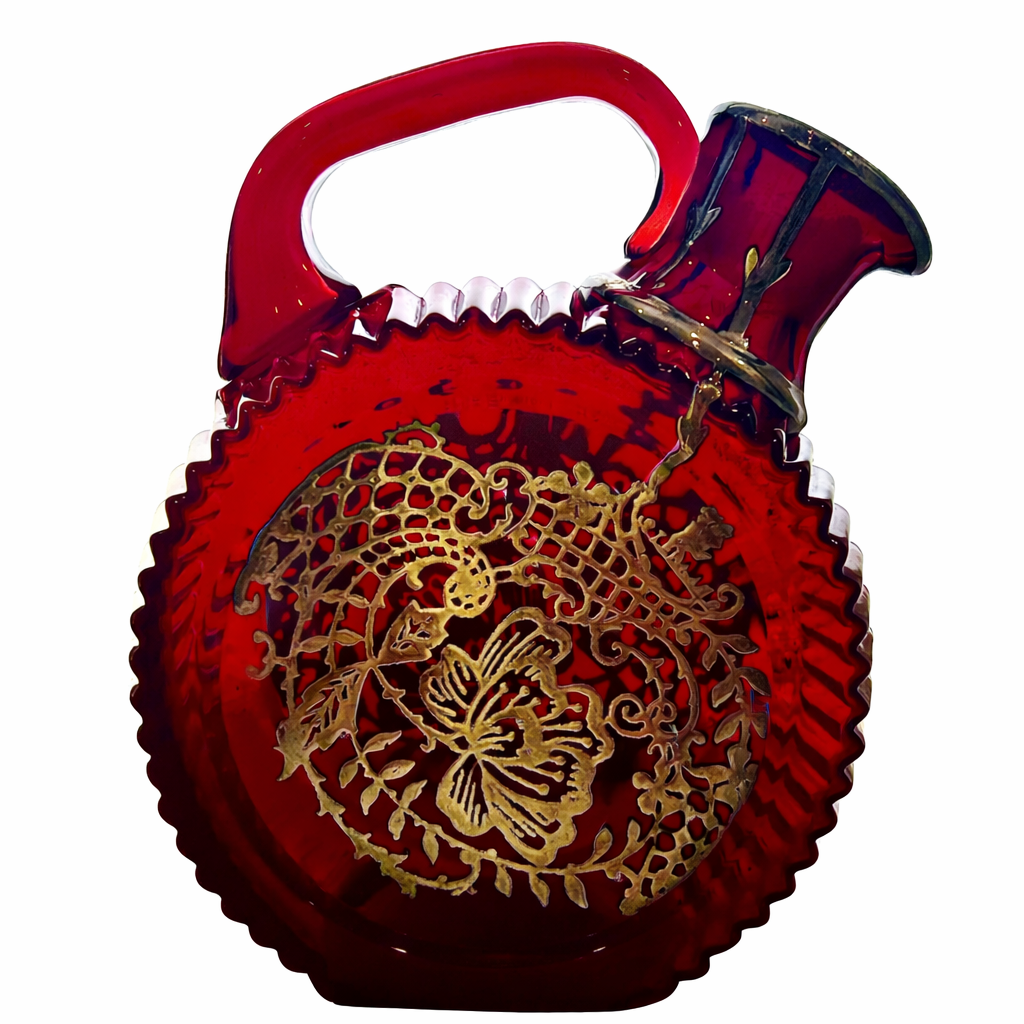
This exceptional ruby glass jug exhibits a profound color saturation and a rhythmic, horizontally ribbed body that creates a dynamic play of light and shadow. The sculptural presence is defined by a bold, integrated handle and a gracefully angled spout, while the front is anchored by a high-relief gilt medallion featuring intricate lattice and foliate motifs. Its dense material quality, polished "thumbprint" base, and vibrant ruby hues offer a compelling architectural accent, transitioning from a functional vessel to a sophisticated light-capturing object for a curated interior.
Attribution & Period
Attributed to Moser or Harrach, 1890s. The presence of a perfectly ground and polished "thumbprint" circular pontil is a hallmark of elite Bohemian glasshouses, distinguishing this piece from standard regional production. The construction is stylistically aligned with late 19th-century Austro-Hungarian "luxury" glass traditions. The combination of gold-chloride cranberry glass, hand-applied raised gilding, and a high-heat selenium reactive interior confirms a sophisticated late-Victorian production era at a major workshop.
⸻
Dimensions & Weight
Height: 6 in Width / Diameter: 5 in (including handle) Depth / Base Diameter: 2 in Weight: 0.856 lb
Condition
Excellent antique condition. No chips, cracks, or structural repairs are observed. The polished base shows appropriate micro-wear consistent with 130+ years of age. The gilt decoration remains remarkably intact with minimal micro-abrasions. Interior exhibits minor sediment film typical of period glass.
Authenticity & Construction
This piece is hand-blown into an optic ribbed mold, featuring an "applied" handle and spout fused at the furnace while molten. A significant technical detail is the inclusion of reactive mineral stabilizers—specifically selenium—within the internal glass batch, resulting in a fiery orange-red fluorescence under UV light. This hidden luminescent quality, paired with the expertly finished polished pontil, serves as a dual verification of high-end 19th-century craftsmanship.
Placement
Ideal as a focal point on a backlit glass shelf, a dark wood sideboard, or a marble-topped console. Its saturated color and gilt details perform best in environments with direct natural light or focused accent lighting to activate the internal optics and reactive core.
STANDARD ATTRIBUTION & VALUE DISCLOSURE This piece is described to the best of current scholarly and market knowledge. Any maker or regional attribution is based on visual analysis, materials, construction techniques, and documented stylistic comparisons. As with many MCM and antique design objects, definitive attribution may not be possible without original labels or factory records. Pricing reflects condition, quality, decorative appeal, and current collector demand rather than guaranteed maker identification.
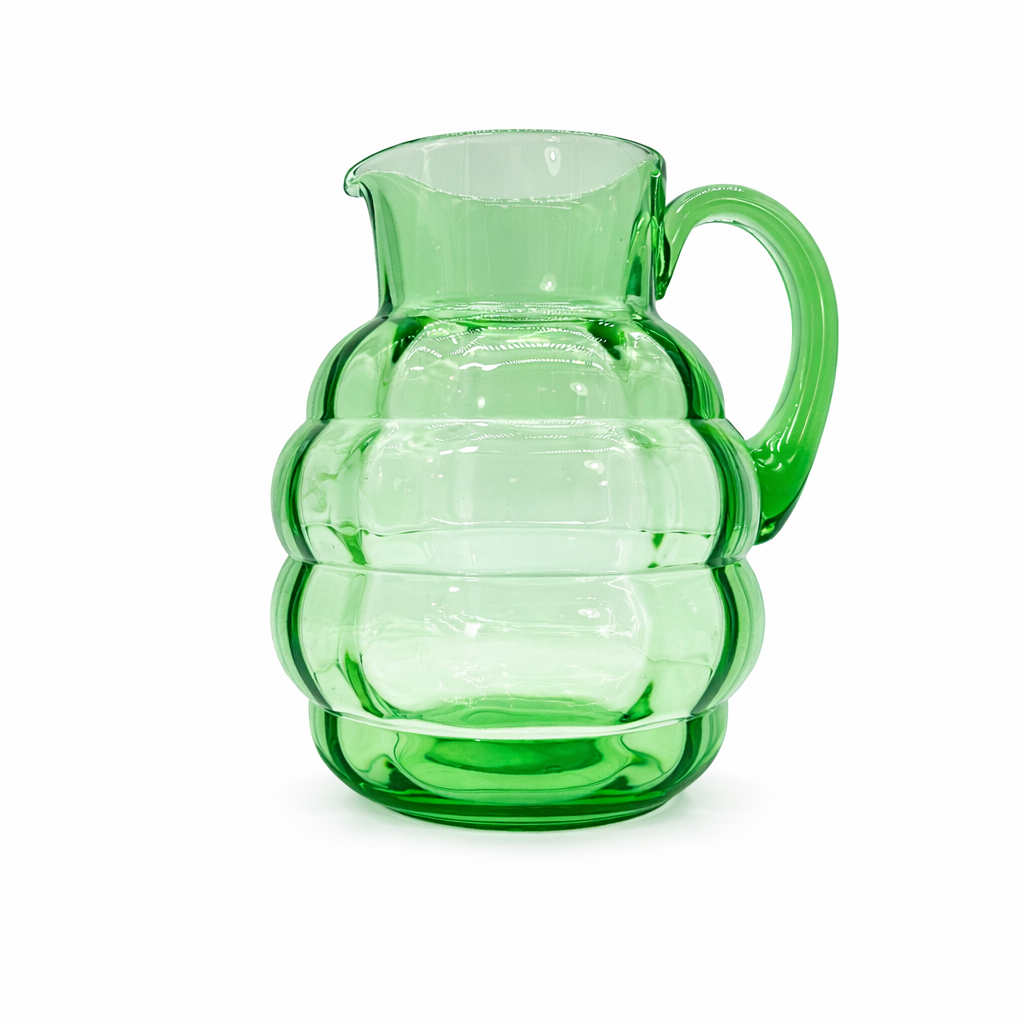
This sculptural green art glass pitcher presents a bold, architectural presence defined by its tiered, rounded body and elegantly arched handle. The luminous green glass shifts in tone from pale celadon to saturated emerald as it interacts with surrounding light, creating strong visual depth and movement. A delicately acid-etched floral and leaf motif encircles the central belly, introducing refined surface detail against the smooth molded form. Under UV 365 light, the vessel exhibits a vivid fluorescence characteristic of uranium glass, adding a dramatic collector feature. The result is a visually compelling decorative object that performs equally well as art glass sculpture or refined tabletop accent.
Attribution & Period
Circa 1930s; Unmarked decorative arts example, best described as a Central European uranium glass pitcher, stylistically aligned with Czech and Bohemian glass production of the interwar period.
The molded tiered body, integrated spout form, acid-etched botanical band, and uranium-green coloration correspond closely with decorative glass produced in Central Europe during the early twentieth century. Similar uranium glass vessels were produced in Bohemia and surrounding regions where pressed or molded forms were frequently enhanced with acid-etched ornamentation. No factory mark or label is observed on the base; attribution therefore remains visual rather than documented.
Dimensions & Weight
Height: 8.5 in
Width / Diameter: 6 in (widest measurement including handle and spout)
Depth / Base Diameter: 3.5 in base diameter
Weight: Not provided
Mouth diameter: 4 in
Condition
Excellent vintage condition. No scratches, chips, hairline cracks, or repairs observed. Surface remains glossy and clean with only minor base wear consistent with careful age and storage. Small internal bubbles and subtle mold characteristics typical of period glass production may be present and are inherent to the manufacturing process.
Authenticity & Construction
The vessel was produced using a molded glass form that created the distinctive three-tiered body profile and integrated spout geometry. The handle was applied while the glass remained hot, fusing seamlessly to the body. Following formation, the floral and leaf decoration was acid-etched into the surface, creating a soft matte motif that contrasts with the polished glass surface.
The vivid green coloration and strong fluorescence under UV 365 light indicate the presence of uranium oxide within the glass composition, a material commonly used in early twentieth-century European glassmaking to produce uranium or vaseline glass. This uranium content causes the glass to emit a bright green glow under ultraviolet light, a defining characteristic sought after by collectors.
Placement
This pitcher works exceptionally well as a sculptural decorative object on a dining credenza, bar cabinet, console table, or illuminated display shelf. When placed near natural light the glass reveals layered tonal depth, while UV display lighting dramatically activates the uranium fluorescence. The piece integrates easily into Art Deco interiors, modern decorative settings, and curated glass collections.
STANDARD ATTRIBUTION & VALUE DISCLOSURE; This piece is described to the best of current scholarly and market knowledge. Any maker or regional attribution is based on visual analysis, materials, construction techniques, and documented stylistic comparisons. As with many MCM and antique design objects, definitive attribution may not be possible without original labels or factory records. Pricing reflects condition, quality, decorative appeal, and current collector demand rather than guaranteed maker identification.
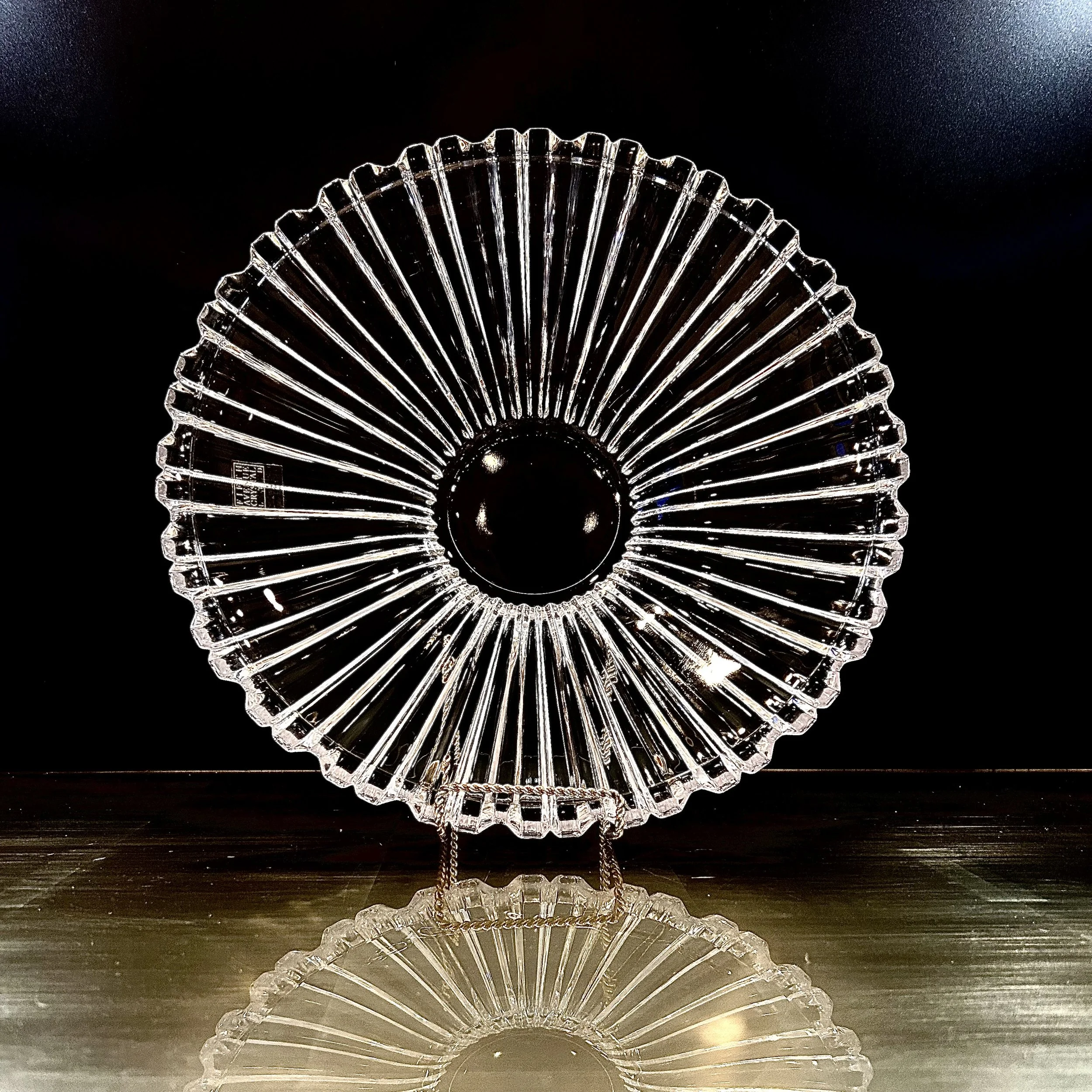
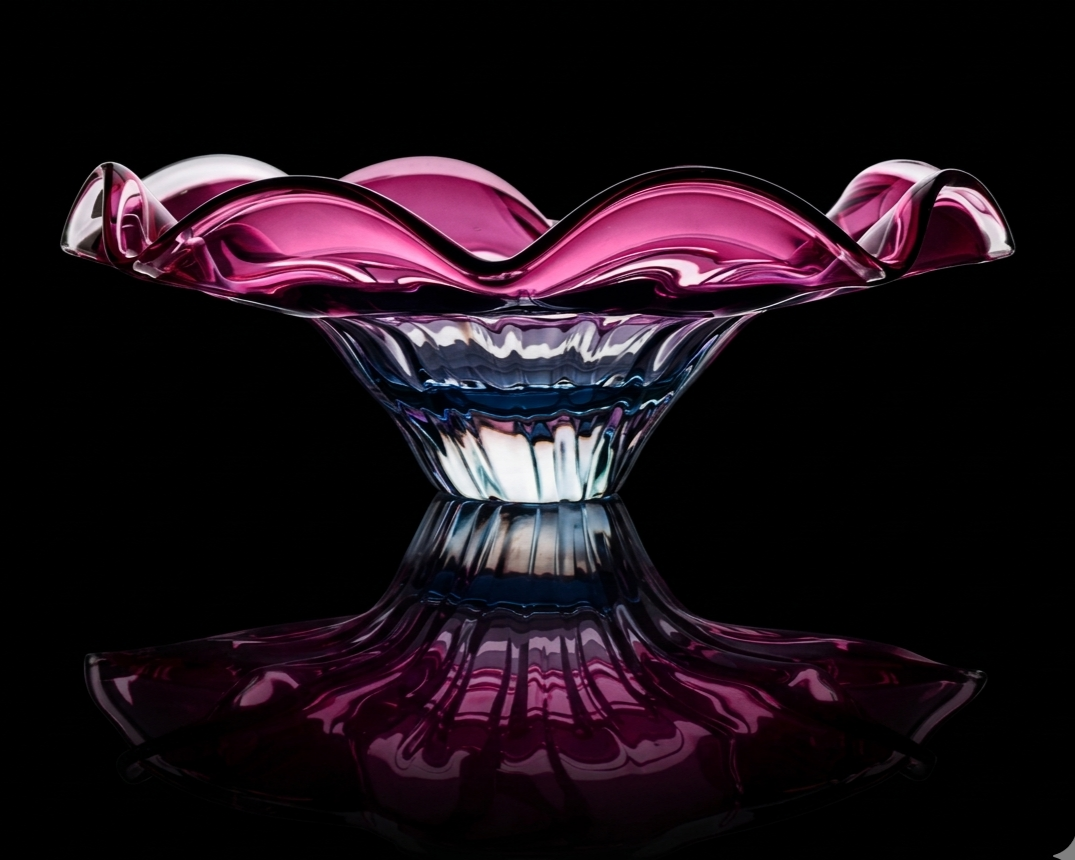
This substantial lead crystal bowl commands attention through its dramatic radial fluting and expansive, shallow proportions. The piece creates a striking play of light, utilizing deep vertical ribs that catch and refract illumination from the center to the scalloped perimeter. Its impressive 14.5-inch diameter and low-profile silhouette emphasize a sculptural presence that bridges the gap between functional centerpiece and fine art glass.
Attribution & Period; by Fifth Avenue Crystal, 1990s
This piece is identified by its original factory label for Fifth Avenue Crystal. Stylistically, the deep-cut radial pattern and high-clarity lead crystal are characteristic of the Late 20th Century revival of classic brilliant-cut motifs, updated here with a cleaner, more minimalist architectural geometry.
Dimensions & Weight
Height: 2.75 inches
Width / Diameter: 14.5 inches
Depth / Base Diameter: 4 inches
Weight: 5.236 lbs
Condition
Excellent vintage condition. The crystal maintains high clarity and luster. Light surface scratches are present on the interior and base, consistent with age and gentle residential use. No chips, cracks, or repairs observed.
Authenticity & Construction
Constructed from high-quality lead crystal, the piece is heavy and resonant. The design features precise, uniform fluting that radiates from a polished central well to a rhythmic, scalloped rim. The presence of the original foil label confirms its provenance and manufacturing standards.
Placement
The low, wide profile makes this an ideal centerpiece for a large dining table or a focal point on a low cocktail table. It is particularly effective when placed under direct lighting to capitalize on its refractive properties within a Contemporary or Hollywood Regency interior.
STANDARD ATTRIBUTION & VALUE DISCLOSURE;This piece is described to the best of current scholarly and market knowledge. Any maker or regional attribution is based on visual analysis, materials, construction techniques, and documented stylistic comparisons. As with many MCM and antique design objects, definitive attribution may not be possible without original labels or factory records. Pricing reflects condition, quality, decorative appeal, and current collector demand rather than guaranteed maker identification.
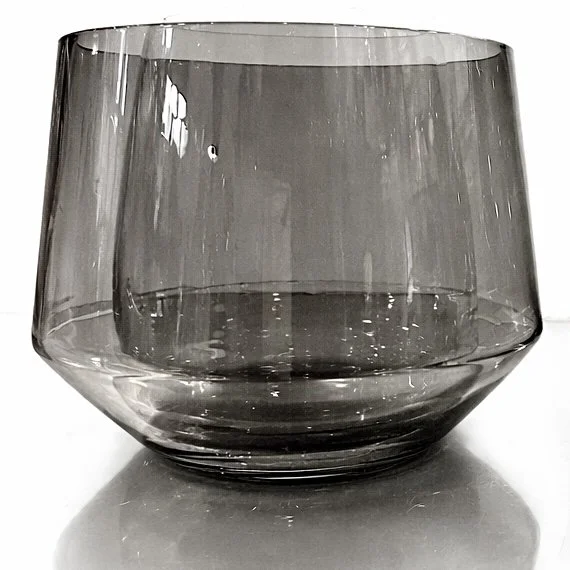
Set of two smoked glass vases defined by clean, volumetric silhouettes and subtle tonal depth. Each piece captures light with a soft grey-green tint, creating a restrained yet atmospheric presence. The contrast between the broader, faceted form and the taller, tapering vessel introduces visual rhythm while maintaining cohesion. Together, they function as a sculptural pairing suited for refined, modern interiors.
Attribution & Period
Unmarked decorative arts example, Contemporary (2000s). The forms, neutral smoked glass tone, and clean finishing are consistent with late 20th to early 21st century mass-produced decorative glass designed for interior styling rather than studio-specific authorship. The presence of a generic “Design” label supports retail production without identifiable maker attribution.
Dimensions & Weight
Taller Vase:
Height: 7 in
Diameter (mouth): 4.25 in
Base Diameter: 5.5 in
Weight: 1.956 lbs
Wider Vase:
Height: 7 in
Diameter (mouth): 7 in
Base Diameter: 4 in
Weight: 2.3 lbs
Condition
Excellent overall condition. No chips, cracks, or repairs observed. Light surface wear confined to the underside consistent with shelf contact. Minor manufacturing inclusions and faint internal bubbles typical of glass production. Surfaces remain clean and structurally sound.
Authenticity & Construction
Mold-blown glass construction with post-production finishing at the rim and base. The consistent wall thickness, smooth transitions, and controlled tinting indicate industrial glassmaking techniques. The smoked coloration is integrated within the glass rather than applied, ensuring durability and uniform tone.
Placement
Ideal as a paired composition on a console, shelving, or dining surface. Works effectively in minimalist, contemporary, or Scandinavian-inspired interiors. Can be styled empty for sculptural impact or with restrained botanical arrangements.
STANDARD ATTRIBUTION & VALUE DISCLOSURE
This piece is described to the best of current scholarly and market knowledge. Any maker or regional attribution is based on visual analysis, materials, construction techniques, and documented stylistic comparisons. As with many MCM and antique design objects, definitive attribution may not be possible without original labels or factory records. Pricing reflects condition, quality, decorative appeal, and current collector demand rather than guaranteed maker identification.
THE SIGNITURE GALLERY
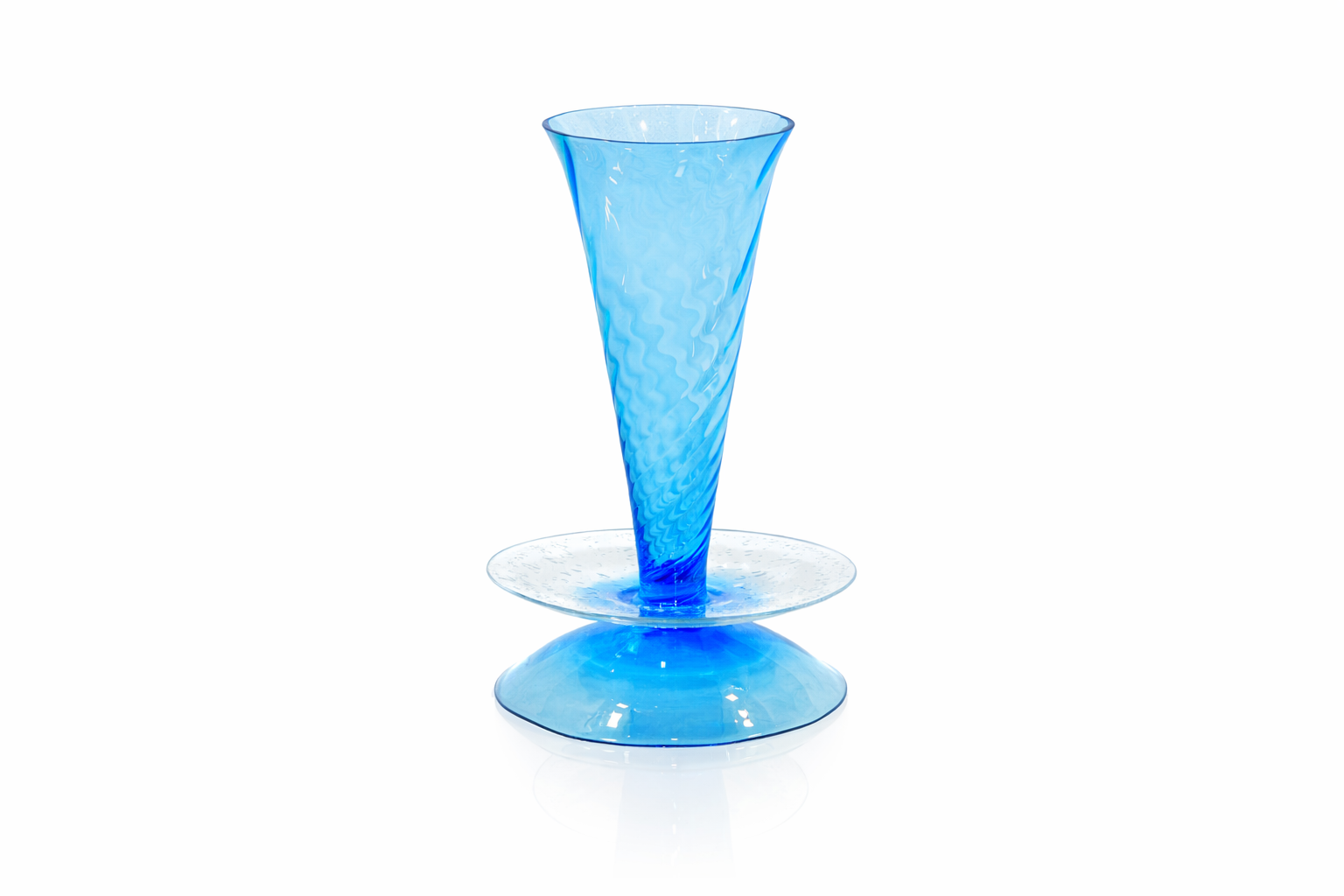
This rare art glass vase exhibits a mesmerizing sculptural presence, characterized by its luminous azure-to-clear gradient and sophisticated light interaction. The form is defined by a rhythmic, twisted optic ribbing that animates the conical body, while the wide, saucer-like mid-section features a dense field of controlled "bullicante" bubbles. Most remarkably, the glass possesses a hidden reactive quality, transitioning from a calm aquatic blue in daylight to a vibrant, electric neon green glow under 365nm UV light. This dual-nature makes it an exceptional conversation piece for high-end collectors who value both avant-garde form and rare material science.
Attribution & Period
by Oiva Toikka for Nuutajärvi Notsjö
This piece is hand-signed on the base "Oiva Toikka Nuutajärvi Notsjö," confirming its origin from Finland's most celebrated glassworks. The design language—specifically the playful use of geometry and the experimental addition of UV-reactive uranium or manganese components—stylistically aligns this work with Toikka's late-century studio experiments. Based on the signature style and the specific color palette, it is attributed to the 1980s.
History of the Artist
Oiva Toikka (1931–2019) was a titan of Finnish design and a "Nestor" of Nordic glass. While globally revered for his legendary Birds by Toikka collection (launched in 1972), he was an artist who famously sought to "break free from the functionalism" of traditional Scandinavian design. Working at Nuutajärvi, Finland’s oldest glassworks, Toikka was celebrated for his imaginative, bold, and often humorous approach. His work is held in the permanent collections of the Museum of Modern Art (MoMA) in New York and the Victoria and Albert Museum in London. This specific vase represents his "Pro Arte" spirit—where the boundaries between utility and pure sculpture are intentionally blurred.
Dimensions & Weight
Height: [Insert Height Here]
Width / Diameter: [Insert Width Here]
Depth / Base Diameter: [Insert Depth Here]
Weight: [Insert Weight Here]
Condition
The object is in impeccable condition. No chips, cracks, or fleabites are present on the flared rim or the delicate saucer edge. The base shows characteristic but minimal shelf wear, confirming its authentic age. The internal "bullicante" bubbles are perfectly suspended, and the UV reactivity is strong and consistent throughout the vessel.
Authenticity & Construction
A triumph of mouth-blown technical skill, this vase utilizes "uranium" glass properties to achieve its dramatic 365nm UV fluorescence. The construction involves a complex multi-part assembly: a ribbed conical vessel fused to a clear, bubble-inclusive disc, set upon a wide, stable domed base. The signature is diamond-point etched by hand, a standard practice for Toikka’s boutique and exhibition-grade pieces.
Placement
Given its dramatic transformation under blacklight, this piece is ideal for a modern interior with curated lighting. It serves as a sophisticated blue accent by day and a glowing neon sculpture by night, perfect for a glass-fronted display cabinet or an architecturally lit side table.
STANDARD ATTRIBUTION & VALUE DISCLOSURE This piece is described to the best of current scholarly and market knowledge. Any maker or regional attribution is based on visual analysis, materials, construction techniques, and documented stylistic comparisons. As with many MCM and antique design objects, definitive attribution may not be possible without original labels or factory records. Pricing reflects condition, quality, decorative appeal, and current collector demand rather than guaranteed maker identification.
Each piece is personally authenticated by the artist’s mark, ensuring its unique provenance and long-term value as a collectible masterpiece.
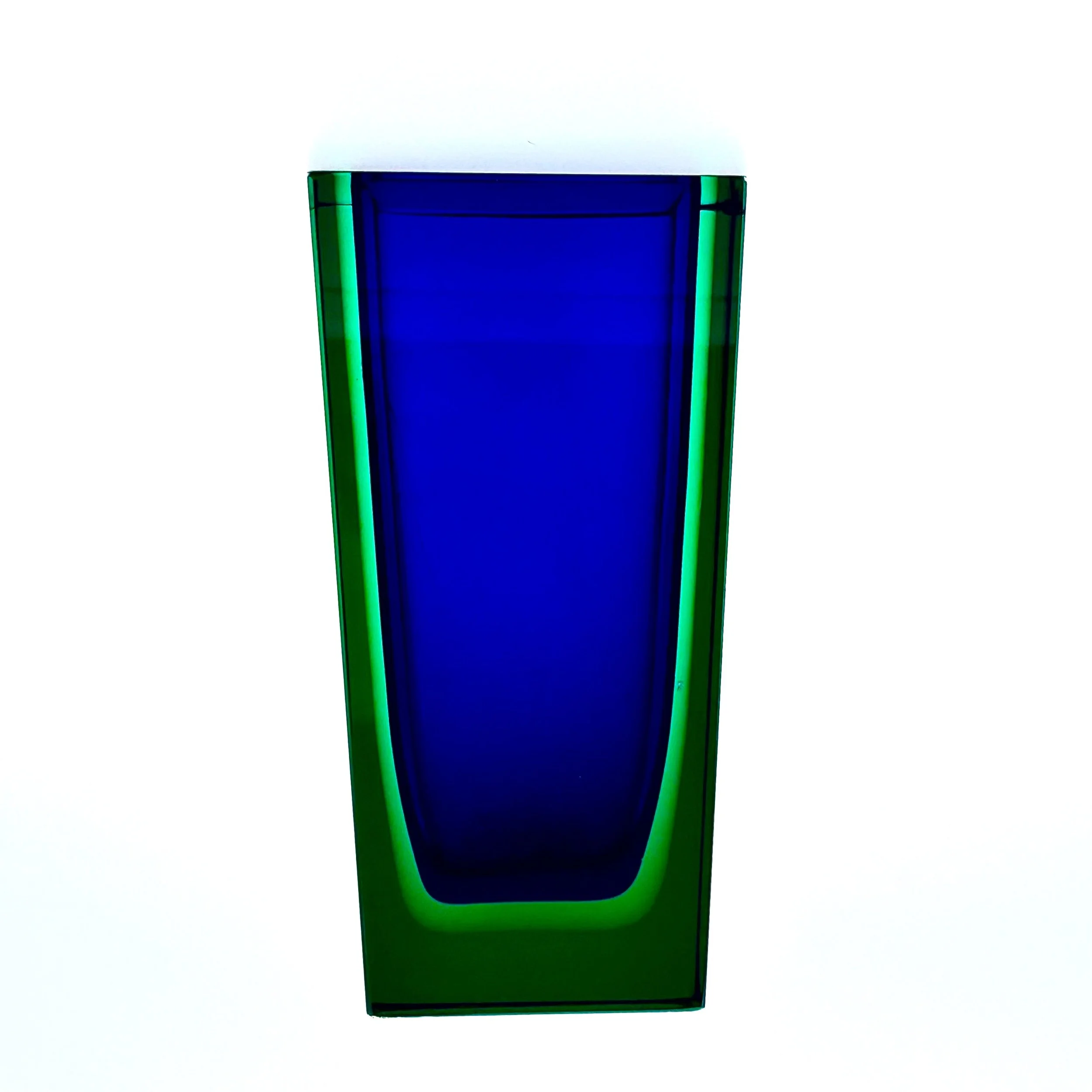
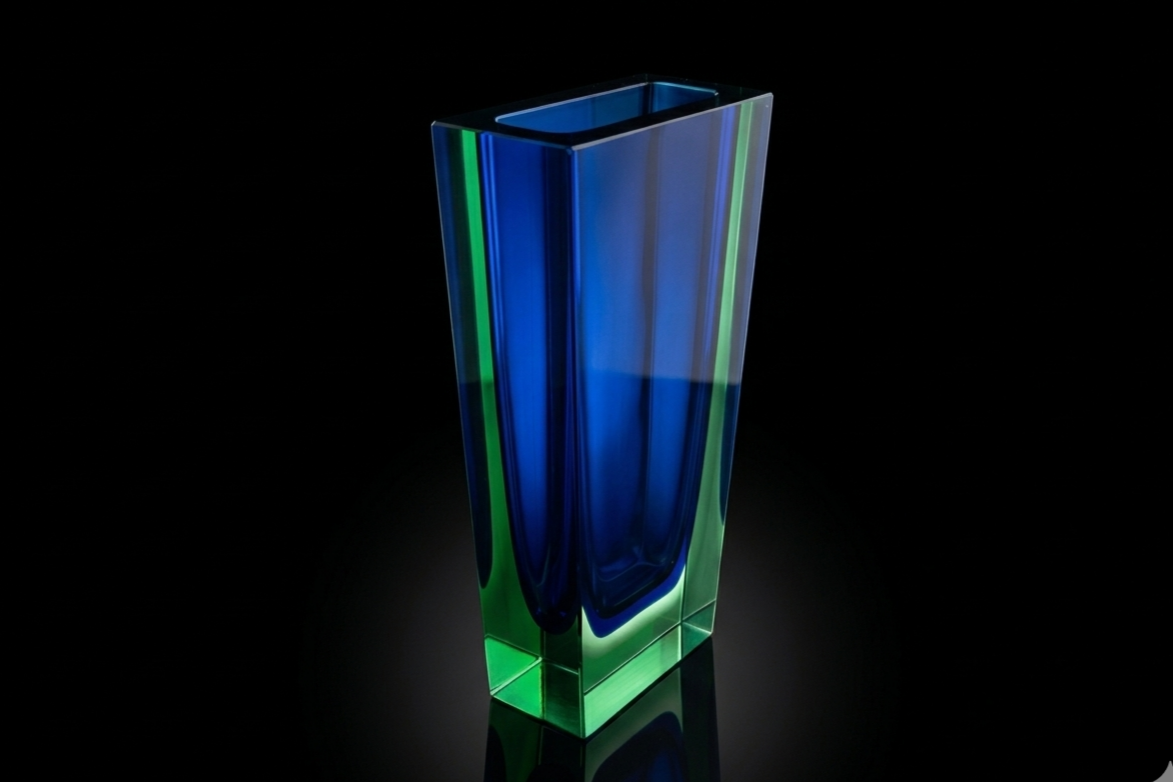
This sculptural cased glass vase possesses a commanding geometric silhouette and deep material richness. The vibrant cobalt core is suspended within a thick emerald casing, creating a luminous, two-tone interplay of light and color depth. Designed with a clean, architectural taper, it serves as a sophisticated focal point for modern or transitional interiors. Its heavy-walled construction and saturated palette make it a compelling decorative object for any curated design collection.
Attribution & Period
Severin Brørby for Hadeland Glassverk, Norway. Signed "Hadeland 7018 SB" on the base. This piece is the iconic Model 7018 (part of the "Blokk" or "K-7000" series), originally designed circa 1969. The form and "K-glass" technique are stylistically aligned with Brørby's award-winning mid-century work, which earned the Norwegian Award for Design Excellence in 1970.
Hadeland Glassverk, Norway. Signed and dated 2018. This piece is a modern archive production of the iconic "Blokk" (Block) series originally designed by Severin Brørby in 1969. The hand-etched signature "Hadeland 2018 SB" confirms its origin from the Hadeland studio, produced as part of a heritage revival of Brørby's award-winning mid-century designs. The form and "K-glass" technique are stylistically aligned with the factory's 1970 Award for Design Excellence winners.
Dimensions & Weight
• Height: 6frac{1}{16} text{ in}
• Mouth: 1frac{5}{8} text{ in} times 3frac{7}{16} text{ in}
• Base: 1frac{5}{16} text{ in} times 2frac{5}{16} text{ in}
• Weight: 1.98 text{ lbs}
Condition
The piece shows a significant internal crack extending upward from the base through the blue glass core. Minor surface shelf wear and light scratches are present on the base consistent with display. No exterior chips, fleabites, or restorations were observed.
Authenticity & Construction
Hand-crafted using the difficult cased glass technique, where a molten blue glass gather is dipped into a secondary green glass melt to create a "glass-within-glass" aesthetic. The heavy-walled construction provides the exceptional clarity and refractive power characteristic of Hadeland’s high-end studio glass. The signature remains crisp and legible on the polished base.
Placement
Ideal for a low-profile credenza, a brightly lit library shelf, or as part of a window-side grouping. This piece is best displayed where natural backlighting can fully activate the luminous contrast between the emerald exterior and cobalt interior.
STANDARD ATTRIBUTION & VALUE DISCLOSURE; This piece is described to the best of current scholarly and market knowledge. Any maker or regional attribution is based on visual analysis, materials, construction techniques, and documented stylistic comparisons. As with many MCM and antique glass objects, definitive attribution may not be possible without original labels or factory records. Pricing reflects condition, quality, decorative appeal, and current collector demand rather than a guaranteed maker identification.
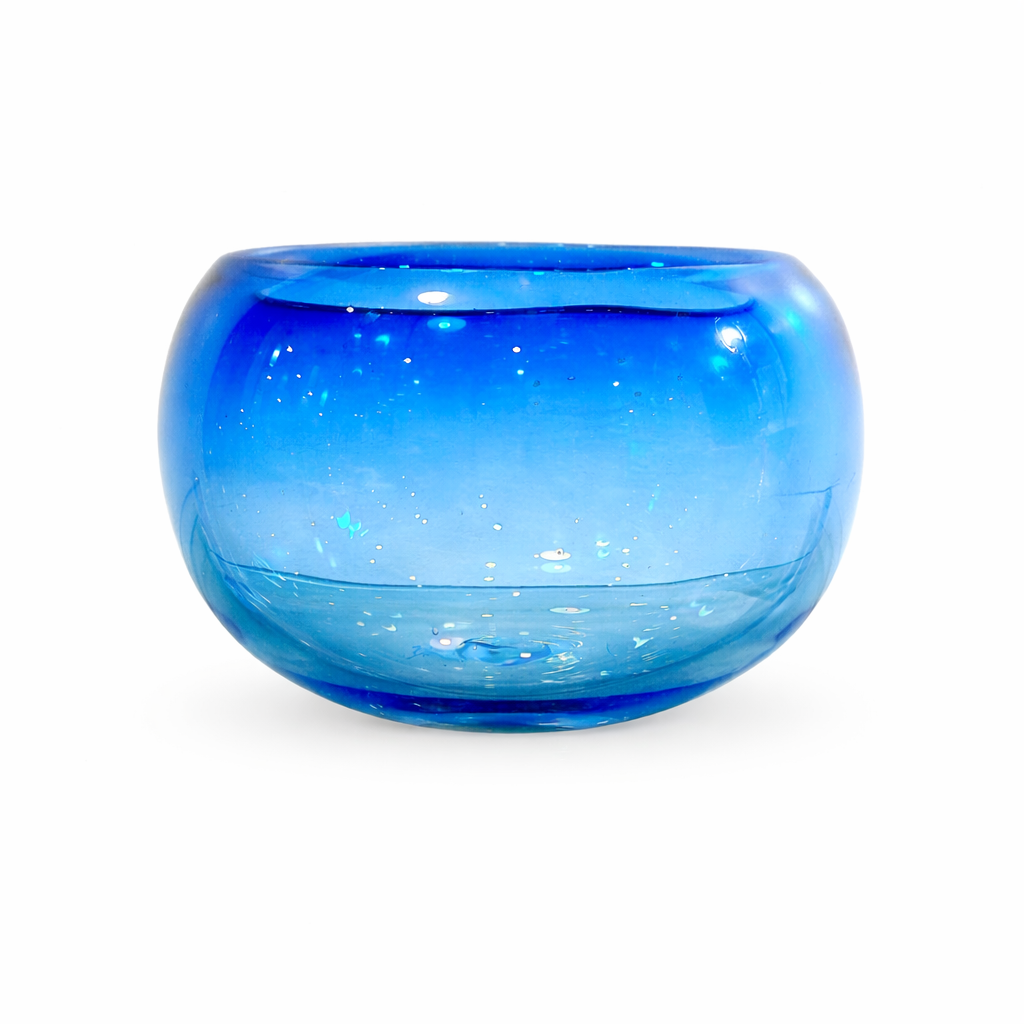
This arresting studio glass bowl showcases a luminous, oil-slick iridescence that shifts brilliantly across its feathered surface. The interior glows with a vibrant gold aurene finish, while the exterior features a complex "pulled feather" motif in contrasting white and amber tones. Its low-slung, flared silhouette and expertly scalloped rim give it a dynamic, organic presence that captures and refracts light from every angle.
Attribution & Period
by Robert Eickholt (Eickholt Glass), 2015.
The signature on the base corresponds to the renowned American glass artist Robert Eickholt, specifically dated 2015. Eickholt is celebrated for his "Eickholt Glass" studio work, which frequently utilized precious metal oxides to achieve this distinct, high-lustre iridescence. This piece was created in the final year of the studio's production (1978–2015), making it a significant example from the conclusion of his storied career.
Dimensions & Weight
Height: 4 in
Width / Diameter: 5.5 in (Body)
Mouth Diameter: 4.25 in
Weight: 1.968 lbs
Condition
Clinical and excellent. No chips, cracks, or repairs are present. The iridescent surface retains its original mirror-like finish without fading or clouding. Minor, superficial shelf-wear scratches are noted on the base, which is consistent with its age and does not affect the display quality of the piece.
Authenticity & Construction
A masterwork of American studio glassmaking, this bowl was hand-formed using the "pulled feather" technique—a method pioneered by Tiffany Studios and refined by contemporary masters like Eickholt. The base is diamond-point signed "Eickholt 2015," confirming its provenance. The heavy-walled construction and substantial 1.9 lb weight are indicative of the artist's premium "Gold Aurene" series.
Placement
This bowl functions as a high-impact sculptural accent on a dark-wood console table or within a glass-fronted vitrine with integrated lighting. Its iridescent qualities make it a perfect companion for Contemporary, Hollywood Regency, or Art Nouveau-inspired interiors.
STANDARD ATTRIBUTION & VALUE DISCLOSURE This piece is described to the best of current scholarly and market knowledge. Any maker or regional attribution is based on visual analysis, materials, construction techniques, and documented stylistic comparisons. As with many MCM and antique design objects, definitive attribution may not be possible without original labels or factory records. Pricing reflects condition, quality, decorative appeal, and current collector demand rather than guaranteed maker identification.
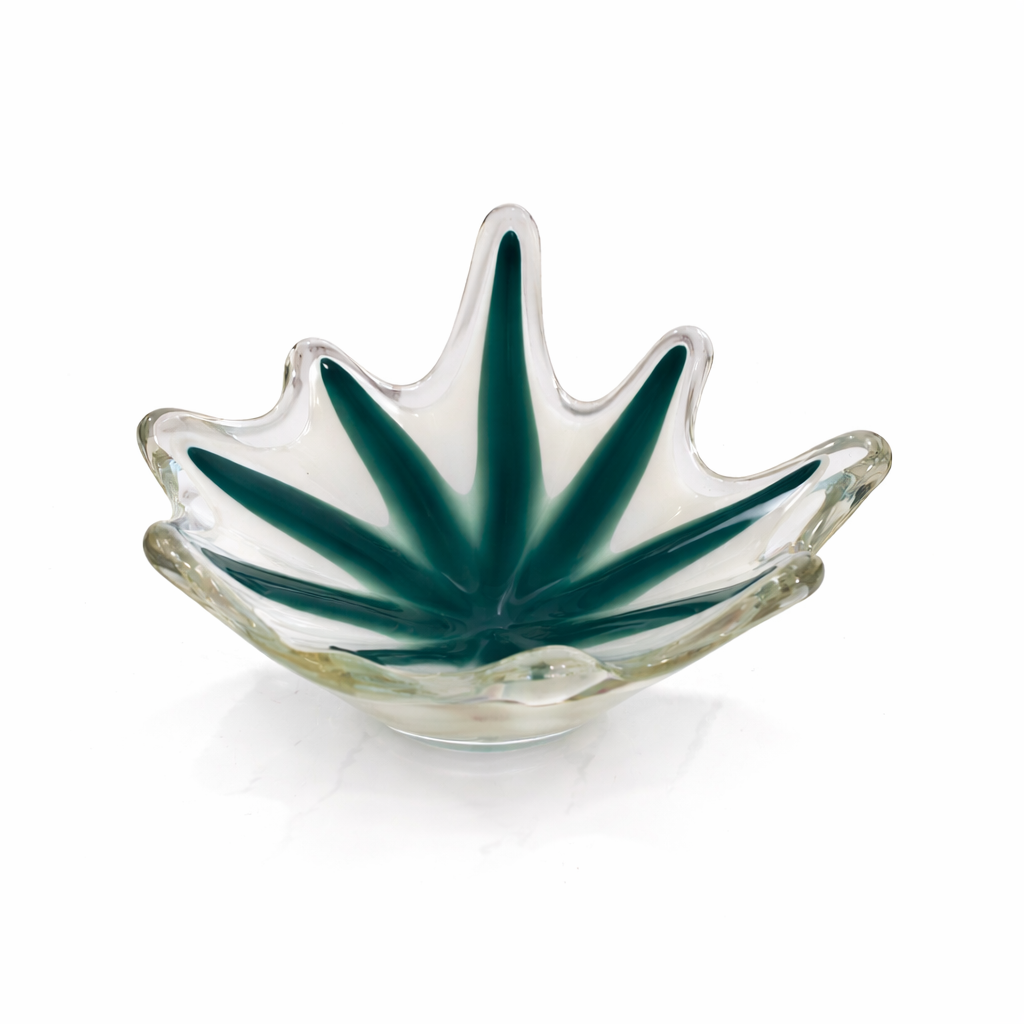
This striking mid-century centerpiece exemplifies the fluid, organic modernism that defined Swedish art glass in the 1950s. The piece features a dramatic "wing" profile, utilizing a complex cased-glass technique that creates an inner core of vibrant pigment suspended within a substantial layer of optical-grade clear glass. Its sculptural presence is amplified by its weight and scale, capturing and refracting light through its varying thicknesses and elegant, biomorphic curves.
Attribution & Period
by Paul Kedelv for Flygsfors
The piece is a definitive example of the "Coquille" series, designed by Paul Kedelv (1917–1990) for the Flygsfors glassworks in Sweden. The signature on the base is a documented factory mark for Flygsfors, dated 1956. Kedelv, who trained under the legendary Orrefors masters, launched the Coquille line in 1952; it remains his most celebrated work, characterized by these shell-like, pulled forms and the "Sommerso" style layering of colors.
Dimensions & Weight
Height: 5 1/2 inches
Width / Diameter: 11 1/4 inches
Depth / Base Diameter: 2 3/4 inches
Weight: 4.15 pounds
Condition
Excellent condition. The glass retains high clarity and luster. No chips, cracks, or significant fleabites are observed on the upper rim or body. The base exhibits light, age-appropriate shelf wear and faint surface scratches consistent with a 70-year-old decorative object. Minor internal bubbles (seeds) are present from the original hand-blowing process, typical of mid-century studio glass.
Authenticity & Construction
Hand-blown in Sweden using the cased glass technique. The artisan began with a core of colored glass, which was then dipped into clear molten glass and manipulated by hand using shears and jacks to pull the elongated "wings." The significant depth of clear glass at the base (3/4 inch) and edges (1/4 inch) is a hallmark of high-quality Flygsfors production, providing the necessary ballast and structural integrity for such a top-heavy, expressive form.
Placement
The sculptural silhouette and horizontal orientation make this an ideal centerpiece for a low-profile credenza, a mid-century teak dining table, or a sunlit architectural niche where the glass can interact with natural light.
STANDARD ATTRIBUTION & VALUE DISCLOSURE This piece is described to the best of current scholarly and market knowledge. Any maker or regional attribution is based on visual analysis, materials, construction techniques, and documented stylistic comparisons. As with many MCM and antique design objects, definitive attribution may not be possible without original labels or factory records. Pricing reflects condition, quality, decorative appeal, and current collector demand rather than guaranteed maker identification.
One of our Notable Signiture Collections: Oiva Toikka for Nuutajärvi Notsjö, Finland


BLEAK HOUSE
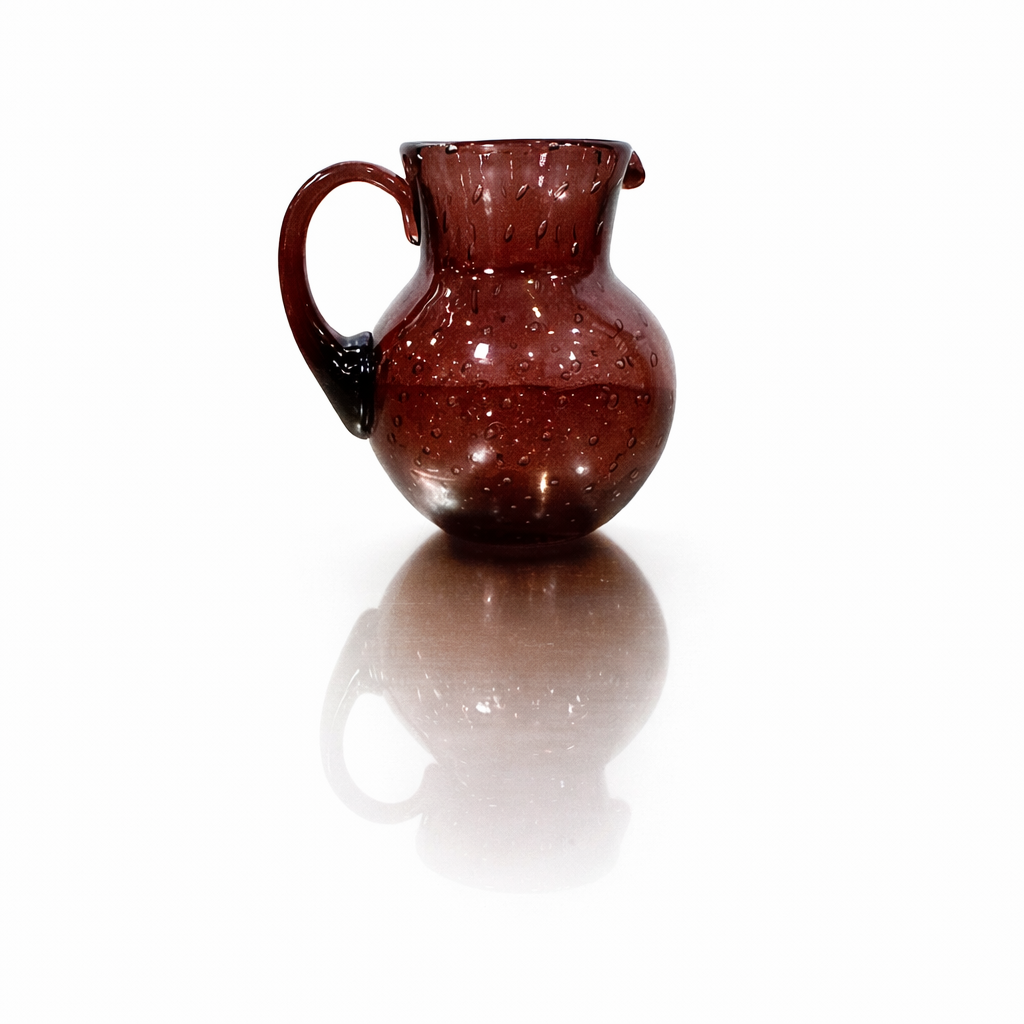
This artisanal glass jug commands attention with its substantial presence and distinctive pulegoso technique, which infuses the deep amethyst glass with a dense, frothy pattern of micro-bubbles. This texture captures light and creates a compelling visual depth, contrasted by a smoothly applied clear glass strap handle and a precisely pinched pouring spout. Adding to its complexity, the glass composition includes manganese or uranium-based agents, which allow it to emit a surprising and vivid green glow under 365nm UV light, revealing a hidden, scientific aspect to its beauty.
Attribution & Period
Consistent with Murano, Italy, 1960s
The execution of the pulegoso texture, combined with the heavy amethyst coloration and the traditional handle design, is highly characteristic of mid-century Venetian production. The specific combination of techniques and the manganese content (indicated by the UV reactive green glow) are stylistically aligned with a period of material experimentation on Murano in the 1960s. The dense, irregular bubbles distinguish it from standard controlled-bubble patterns, instead creating a foam-like appearance typical of pulegoso.
Dimensions & Weight
Height: 5 9/16 inches
Width / Diameter (Widest Point): 5 inches
Depth / Base Diameter: 2 1/2 inches
Opening Diameter: 2 1/4 inches
Weight: 1.78 lbs
Condition
Excellent antique condition. The jug is incredibly well-preserved, with no observed cracks, chips, or surface scratches to the purple or clear glass. Its considerable weight for the size confirms its high material quality. The base shows a prominent, rough pontil scar, about 3/4 of an inch in diameter, which is a desirable characteristic of true hand-blown artisanal glass.
Authenticity & Construction
Hand-blown in Murano, Italy, this jug utilizes the pulegoso technique, achieved by introducing a substance that releases gas into the molten gather just before molding. This complex process requires precise temperature control to trap the bubbles rather than let them escape. The clear handle was added while still molten and attached by hand. The base features a prominent, unpolished pontil mark where the blowpipe was detached, left raw to prove its hand-fabricated origins.
Placement
This jug should be placed on a surface where its texture can be fully appreciated—perhaps on a travertine vanity or on a floating shelf where natural light can activate its dense bubbles. It serves as an elegant standalone sculptural element and, for collectors of unusual glass, can be paired with a UV light source to showcase its rare and dramatic fluorescence, offering a conversation-starting dynamic feature to any room.
STANDARD ATTRIBUTION & VALUE DISCLOSURE; This piece is described to the best of current scholarly and market knowledge. Any maker or regional attribution is based on visual analysis, materials, construction techniques, and documented stylistic comparisons. As with many MCM and antique design objects, definitive attribution may not be possible without original labels or factory records. Pricing reflects condition, quality, decorative appeal, and current collector demand rather than guaranteed maker identification.
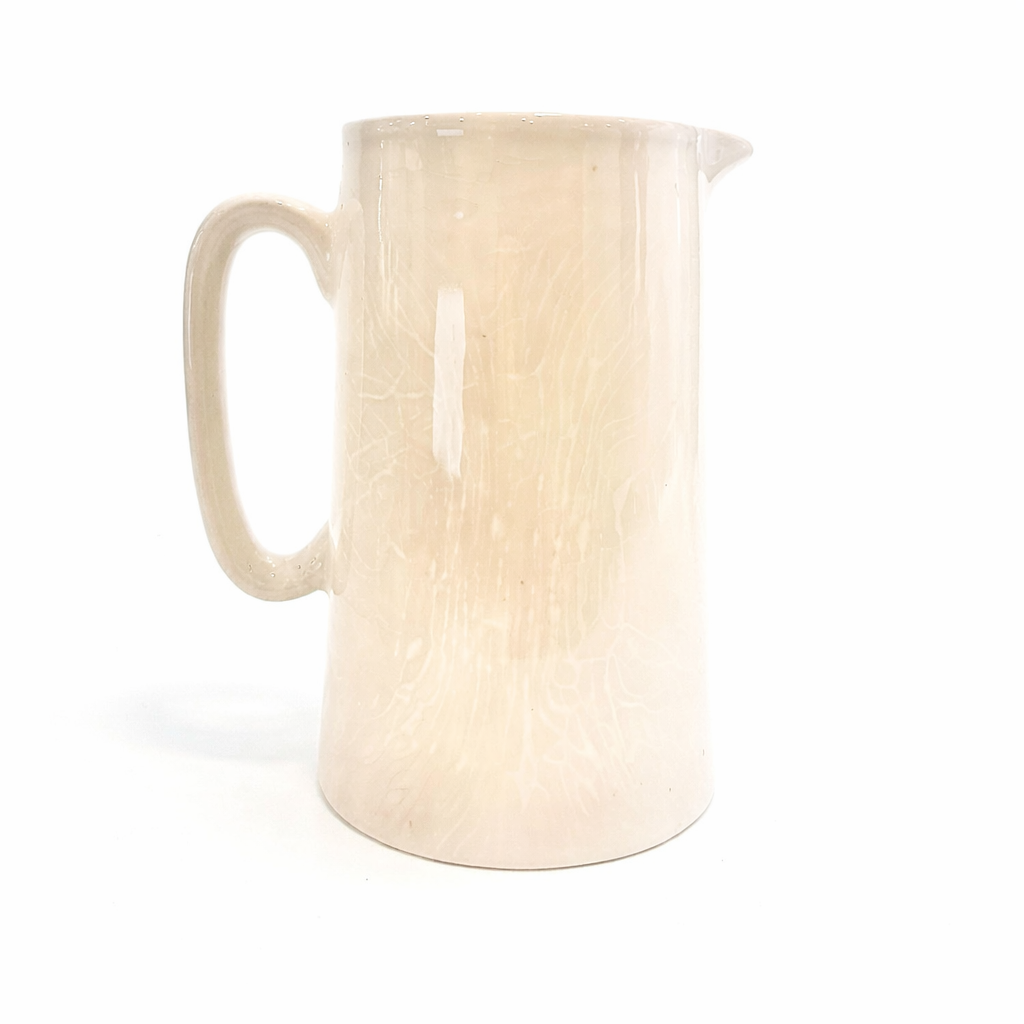
A refined ceramic pitcher defined by its restrained silhouette and softly articulated spout, this piece embodies a quiet, sculptural presence. The creamy, translucent glaze reveals subtle tonal variation and depth, catching light across its gently curved surface. Its balanced proportions and minimal handle design contribute to a composition that is both functional and architecturally composed. The surface presents a delicate network of crazing, enhancing its visual complexity and material richness.
Attribution & Period
Marked example from Lord Nelson Pottery, England, dated December 1978. The attribution is supported by the stamped base mark and inscribed date, consistent with known production from the period, including the use of high-fired ceramic bodies and softly pooled glaze finishes characteristic of English studio-influenced manufacture of the late 1970s.
Dimensions & Weight
Height: 6 in
Width / Diameter: 4.6 in (including handle and spout)
Depth / Base Diameter: 3 in
Weight:
Condition
No chips, cracks, or repairs observed. The glaze presents visible crazing throughout, with light staining within the craze lines consistent with age and use. Surface toning and minor wear are present, aligning with material age. Base shows expected wear from contact with surfaces.
Authenticity & Construction
Wheel-thrown and kiln-fired ceramic construction with a semi-translucent glaze applied prior to firing. The controlled form and even wall thickness indicate skilled production, while the glaze behavior—pooling, tonal shifts, and fine crazing—reflects both firing conditions and long-term material response. The stamped base mark and date confirm production origin and period.
Placement
Ideal as a sculptural accent within a refined interior, this piece integrates seamlessly into minimalist, wabi-sabi, or modernist settings. It functions equally well as a standalone object, part of a ceramic grouping, or styled within open shelving, kitchens, or dining environments where material subtlety and form are emphasized.
STANDARD ATTRIBUTION & VALUE DISCLOSURE
This piece is described to the best of current scholarly and market knowledge. Any maker or regional attribution is based on visual analysis, materials, construction techniques, and documented stylistic comparisons. As with many MCM and antique design objects, definitive attribution may not be possible without original labels or factory records. Pricing reflects condition, quality, decorative appeal, and current collector demand rather than guaranteed maker identification.
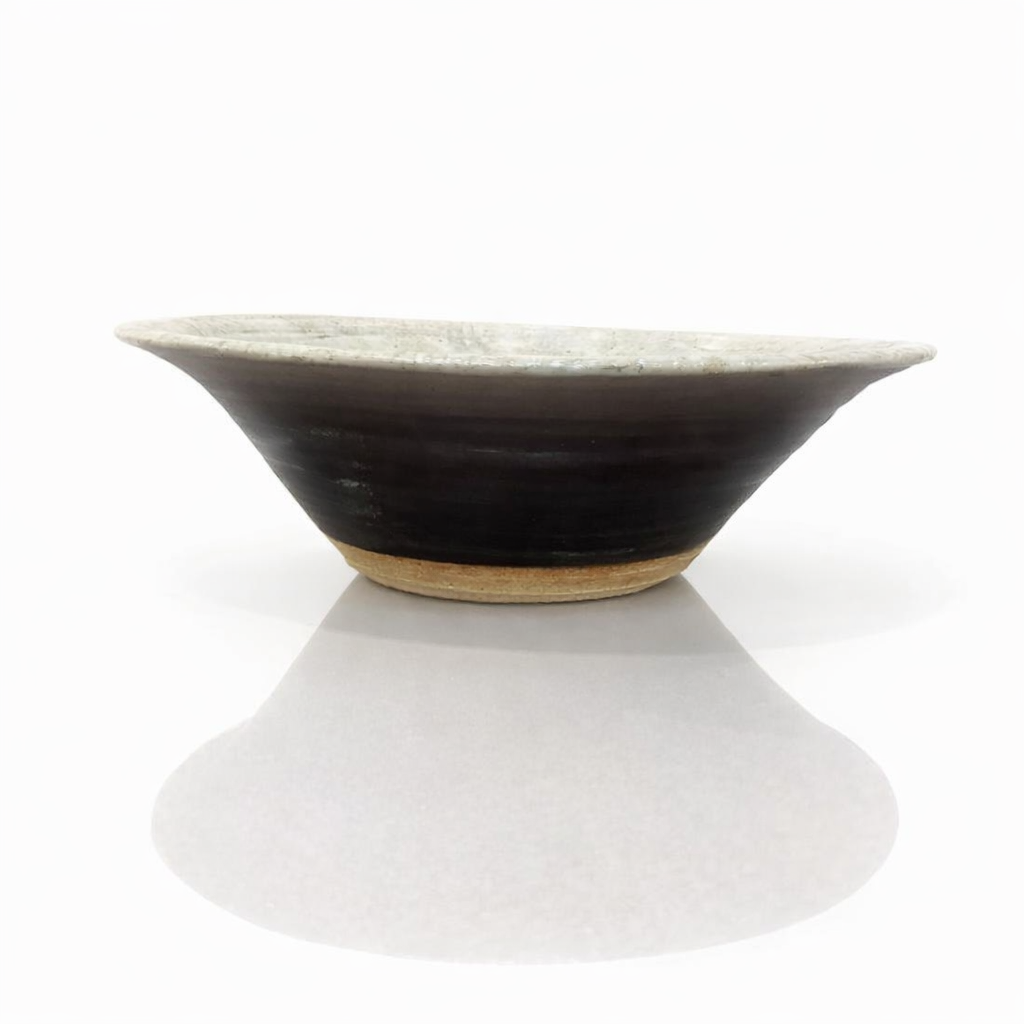
Monumental hand-thrown studio stoneware bowl of commanding scale and refined restraint, executed in a Japanese-influenced ash-glaze tradition. The form is broad and architectural, with a wide flared rim and shallow grounded profile that gives the piece quiet authority and sculptural balance.
The interior is finished in a pale, milky ash-style glaze layered with visible throwing rings, natural speckling, and soft pooling toward the well. The surface carries depth and tonal movement characteristic of high-temperature firing. The exterior transitions into warm iron-brown reduction tones, revealing kiln atmosphere variation and controlled firing mastery
The unglazed foot exposes the clay body and firing marks. A small impressed spiral near the base reads as a studio trimming or maker’s mark rather than a commercial stamp, reinforcing handmade origin. Pencil notations to the underside are consistent with studio inventory markings and are not later additions.
Attribution & Period
While unattributed, the scale, glaze chemistry, and disciplined form strongly align with late 20th-century Western studio pottery influenced by Japanese mingei and ash-glaze traditions. The restraint, surface behavior, and confident proportions indicate an experienced studio hand rather than hobby production.
Late 20th century, likely 1970s–1990s, within the Western studio pottery movement informed by Japanese aesthetics.
Dimensions & Weight
Mouth diameter: 13 in
Depth: 4 in
Base diameter: 5 in
Condition
Very good studio condition. No cracks, repairs, or structural issues observed. Minor glaze variation, kiln marks, and surface irregularities are inherent to high-fire studio production and integral to the aesthetic.
Authenticity & Construction
This is high-fired studio stoneware rooted in Japanese-influenced ash-glaze practice. It is not factory production or decorative mass-market pottery. Surface movement and firing variation confirm authentic studio origin.
Placement
A large-scale ceramic statement suited to gallery display, architectural interiors, wabi-sabi environments, or curated postwar studio collections. Equally compelling as a sculptural centerpiece or standalone vessel.
STANDARD ATTRIBUTION & VALUE DISCLOSURE; This piece is described to the best of current scholarly and market knowledge. Any maker or regional attribution is based on visual analysis, materials, construction techniques, and documented stylistic comparisons. As with many vintage and antique glass objects, definitive attribution may not be possible without original labels or factory records. Pricing reflects condition, quality, decorative appeal, and current collector demand rather than a guaranteed maker identification.
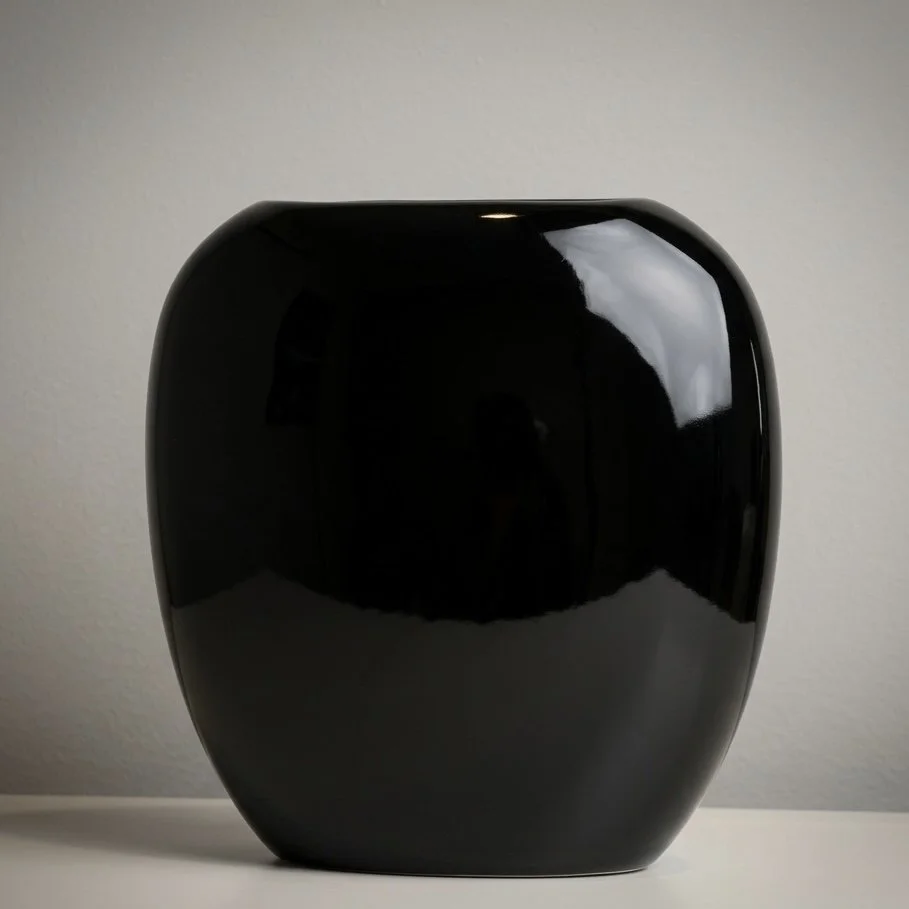
This monolithic vessel exerts a powerful sculptural presence through its compressed, ovoid geometry and "mirror-black" glaze. The form is a masterclass in mid-century minimalism, utilizing a low center of gravity and a precise, elongated aperture designed specifically for the structural requirements of architectural floral arrangement. Its surface depth and high-reflectivity finish create a sophisticated interplay of shadow and light, making it a definitive statement piece for a curated interior.
Attribution & Period
Mid-Century Modern (1960s)
This vessel is a definitive example of Japanese studio pottery, attributed to the Mashiko tradition. The hand-incised signature on the base is consistent with the stylized, western-facing marks used by Mashiko-based artists during the 1960s international design boom. The characteristic "pin-hole" bubbling in the glaze and the iron-rich clay body are direct signatures of the high-temperature reduction firing processes unique to the Tochigi Prefecture. This piece represents the critical era where traditional Japanese folk-craft (Mingei) transitioned into high-modernist sculptural art.
Dimensions & Weight
Height: 5.75 in
Width / Diameter: 6 in (widest area)
Depth / Base Diameter: 3.375 in x 1.625 in (base)
Weight: 0.224 lbs
Condition
The vessel is in immaculate, museum-grade condition. The high-gloss midnight glaze remains vibrant and deep with no chips, cracks, or restorations. Clinical examination reveals minor "glaze pops" or pin-hole bubbles near the shoulder, which are an authentic, sought-after result of the artisan kiln firing process. Light, appropriate shelf wear is present on the unglazed foot, confirming its vintage origin and careful residential history.
Authenticity & Construction
Hand-thrown and expertly altered, the vessel exhibits a seamless transition from its stable base to the elegantly tapered rim. The midnight glaze is applied with exceptional thickness, achieving a liquid-like depth that is a hallmark of Mashiko studio work. The hand-incised signature is deeply integrated into the clay body, providing a permanent and verifiable mark of provenance.
Placement
The dramatic silhouette and noir finish demand a prominent placement. It is exceptionally well-suited for a brutalist sideboard, a minimalist stone mantel, or a glass-top executive desk. It functions with equal strength as a standalone sculptural object or as a vessel for a singular, architectural branch to highlight its Ikebana heritage.
STANDARD ATTRIBUTION & VALUE DISCLOSURE; This piece is described to the best of current scholarly and market knowledge. Any maker or regional attribution is based on visual analysis, materials, construction techniques, and documented stylistic comparisons. As with many MCM and antique design objects, definitive attribution may not be possible without original labels or factory records. Pricing reflects condition, quality, decorative appeal, and current collector demand rather than guaranteed maker identification.
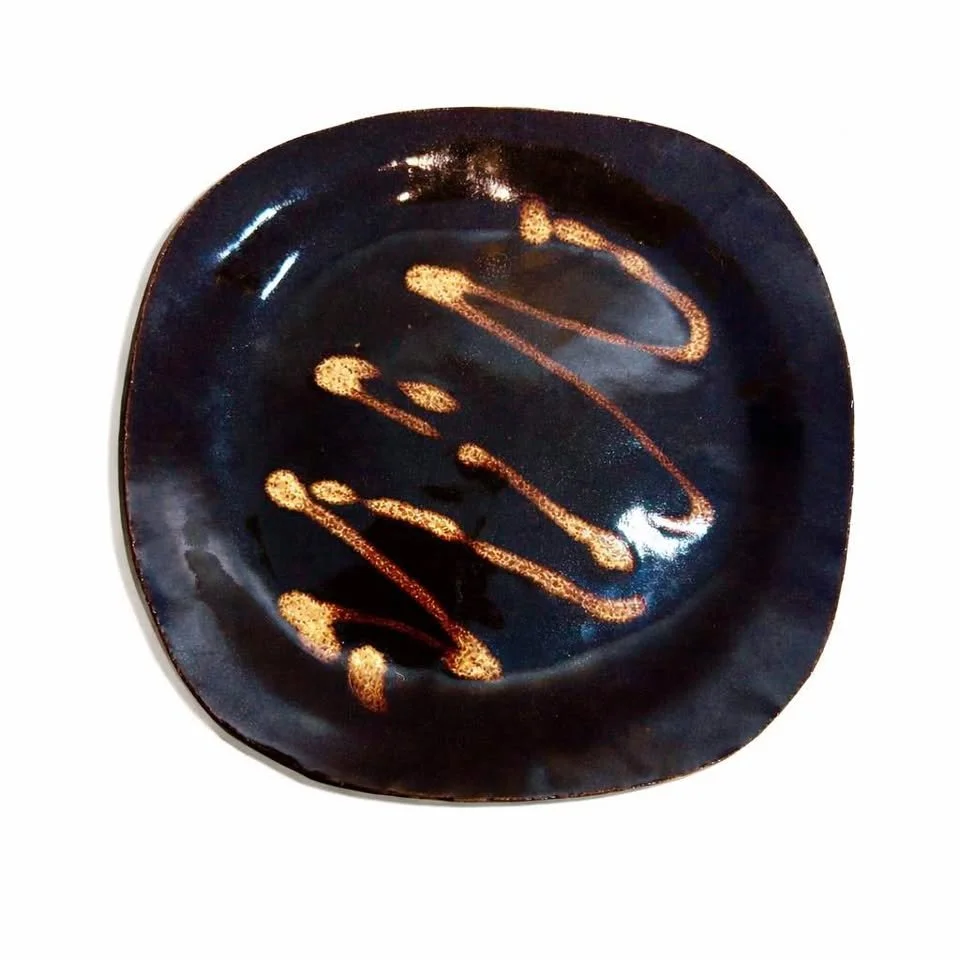
A compelling handmade studio pottery charger / display plate with a strong mid-century modern / studio craft presence. The plate is formed as an organic, softly squared shape with rounded corners, finished in a rich gloss black glaze and decorated with bold ochre slip work in a sweeping, calligraphic motif.
Placement
The contrast of deep black and warm ochre, combined with the subtly irregular hand-formed profile, makes this a standout piece for collectors of design-forward ceramics.
Dimensions & Weight
Diameter: 7 1/4 in (7.25)
Side-to-side: 7 in each side
(Handmade; slight variation is expected and desirable.)
Authenticity & Construction(collector notes)
Handmade stoneware Gloss black glaze with natural pooling/movement Ochre slip decoration (likely slip-trailed / slip-brushed) Studio kiln-fired finish Unglazed foot/base showing clay body and firing character The surface decoration appears to be slip-trailed or slip-brushed (raised-to-textured, kiln-set lines) that breaks and freckles organically through the glazean effect prized in studio ceramics for its depth and movement. Under light, the glaze presents as inky black with tonal variation and pooling, while the unglazed base reveals a stoneware body with natural firing speckle and an honest studio finish.
Condition
Excellent, polished, condition. no cracks, repairs or chips Typical handmade/studio characteristics may include minor glaze variation, kiln marks, and subtle surface texture consistent with studio firing. Please review all photos as part of the description.
Attribution & Period
The underside bears an impressed makers stamp that appears to read CT within a rectangular cartouche (see close-up photographs). Without a published mark reference or provenance, this piece is best described as studio pottery with a clear stamped mark for collector confidence. Estimated Date (best-supported listing language) Likely late 20th century (circa 1960s1990s) based on the studio-stamped mark, the organic square form, and the black-glaze-with-slip-decor aesthetic common to that periods studio ceramics. (A narrower date range would require a confirmed maker identification.)
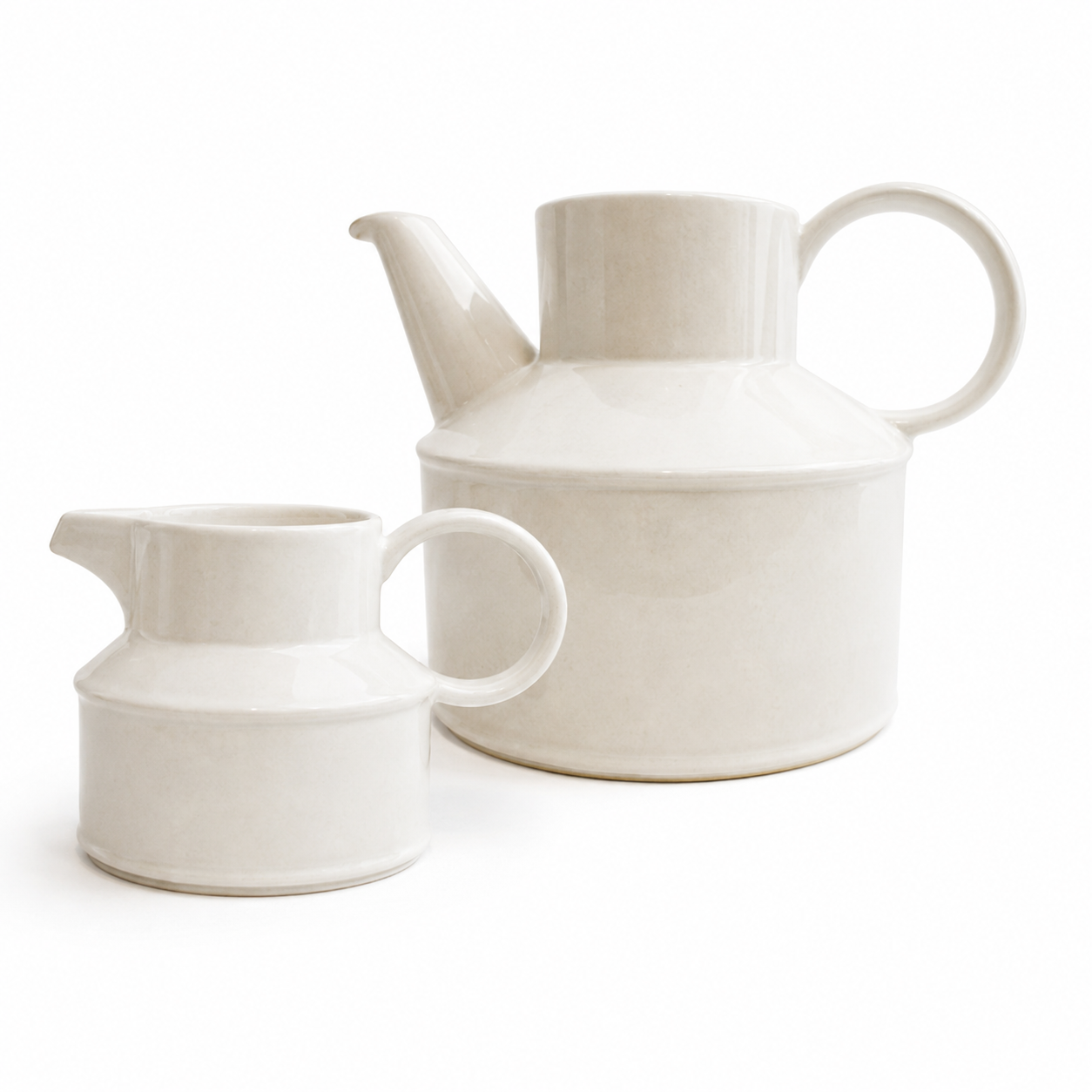
An exceptional pairing of post-war British studio-style design, this substantial ceramic coffee pot and matching creamer exhibit a captivating architectural silhouette. Defined by their wide, perfectly flat circular bases and dramatic, oversized loop handles, the forms offer an exceptional tactile quality that commands visual attention. The crisp geometries of the cylindrical bodies contrast beautifully with the sweeping curves of the handles and minimal spouts, elevating these functional vessels into a compelling set of mid-century ceramic sculpture.
Attribution & Period
Midwinter Pottery was founded in Burslem, Stoke-on-Trent, in 1910 and became especially important in the post-war period under Roy Midwinter, when the company helped reshape British tableware through modern forms and collaborations with notable designers. Stylecraft, introduced in 1953, is widely recognized as Midwinter’s first major modern tableware direction, influenced by contemporary American and California design rather than traditional English pottery forms.
This coffee pot and creamer service is by W.R. Midwinter Ltd. (part of the Wedgwood Group), produced in Staffordshire, England. The distinctive silhouettes belong to the legendary "Stonehenge" collection designed by Eve Midwinter in the early 1970s, which revolutionized British commercial pottery with its rustic, studio-pottery aesthetic. Showcasing an intentionally lidless, open-topped architectural design for the pouring vessel, this specific set features a clean, glossy glaze that beautifully accentuates the stark profiles. The coffee pot is explicitly stamped with a production date of December 1978 on the underside, securely anchoring this set to the late 1970s at the height of Mid-Century Modern kitchenware innovation.
Dimensions & Weight
Height: 7.5 inches (Coffee Pot),
4 inches (Creamer)
Width / Diameter: 7.5 inches (Coffee Pot width including handle and spout),
5.5 inches (Creamer width including handle and spout)
Depth / Base Diameter: 4.75 inches (Coffee Pot base diameter), 3.5 inches (Creamer base diameter)
Weight: 1.8 lbs (Coffee Pot),
0.75 lbs (Creamer)
Condition
Clinical and pristine. Both pieces are in excellent condition, the teapot has a tiny chip on the spout as demonstrated in one if the photographs, the creamer and remainder of the pot prove no chips, cracks, hairline fractures, or surface scratches to the glaze. The structural integrity of the oversized handles is perfect, and the flat, unglazed standing rims at the bases show virtually no shelf wear.
Authenticity & Construction
Crafted from a durable, heavy-bodied semi-porcelain ceramic compound, this set reflects Midwinter’s high-quality industrial manufacturing designed to mimic heavy hand-thrown studio pottery. The substantial weight of each piece ensures exceptional stability on flat surfaces. The bottom of the vessels features the authentic factory marks, including the precise December 1978 date stamp on the main pouring piece, confirming its origin in England.
Placement
With their bold, minimalist profiles, this coffee pot and creamer serve as an excellent graphic and sculptural accent. They are ideally styled as a pair on open oak kitchen shelving, a brutalist dining room sideboard, or displayed alongside minimalist stoneware on a refined morning room étagère.
STANDARD ATTRIBUTION & VALUE DISCLOSURE; This piece is described to the best of current scholarly and market knowledge. Any maker or regional attribution is based on visual analysis, materials, construction techniques, and documented stylistic comparisons. As with many MCM and antique design objects, definitive attribution may not be possible without original labels or factory records. Pricing reflects condition, quality, decorative appeal, and current collector demand rather than guaranteed maker identification.
FRENCH COASTAL
-
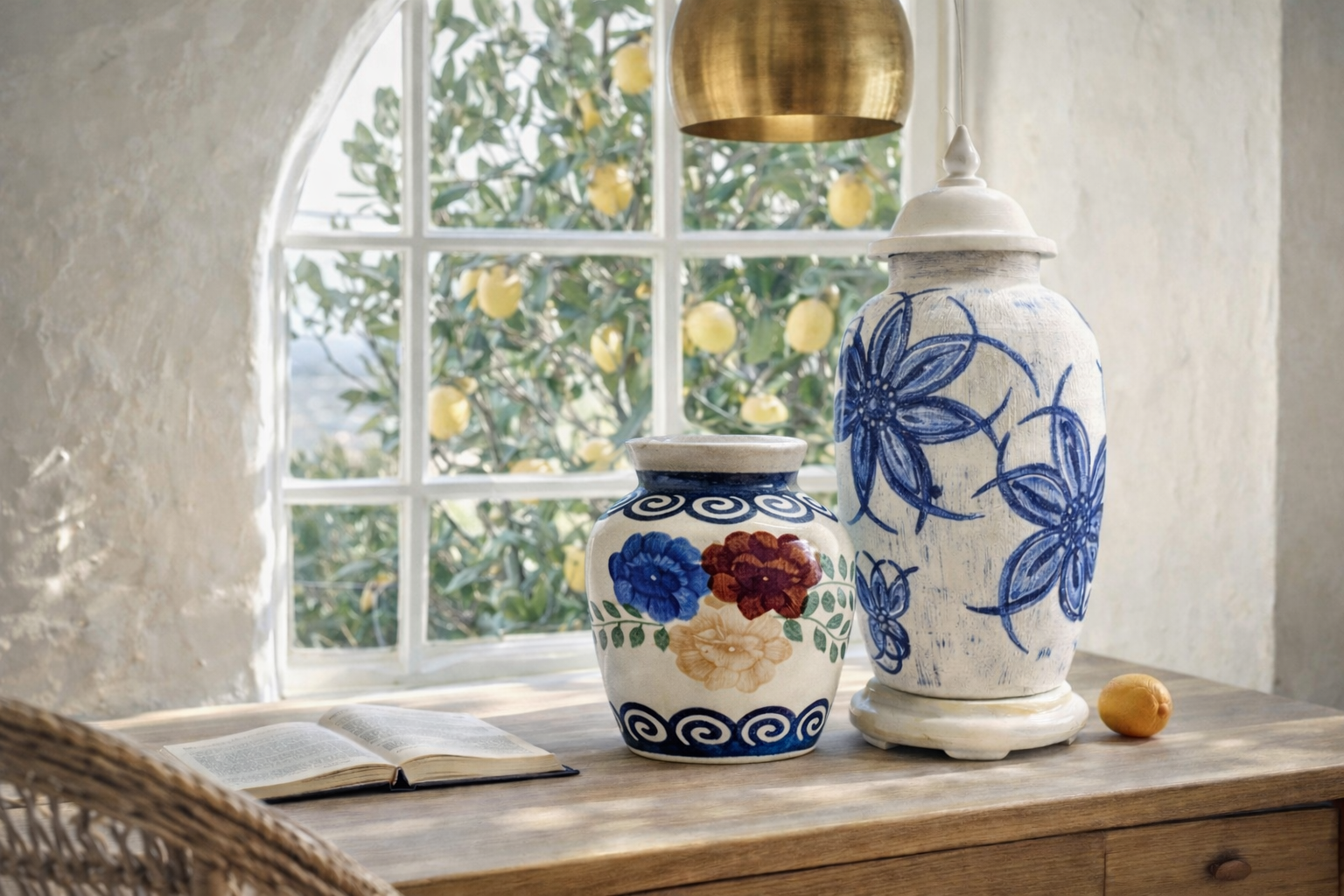
![Hand Painted Ceramic Vase, Signed - Portugal c 1950]()
This is coastal without cliché —
-
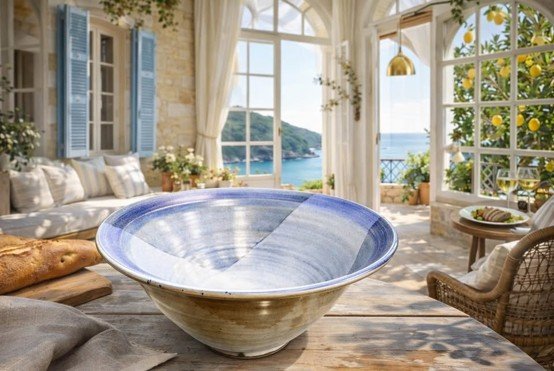
![Signed Studio Pottery | Hand-Thrown Blue Stoneware]()
structured yet effortless
-
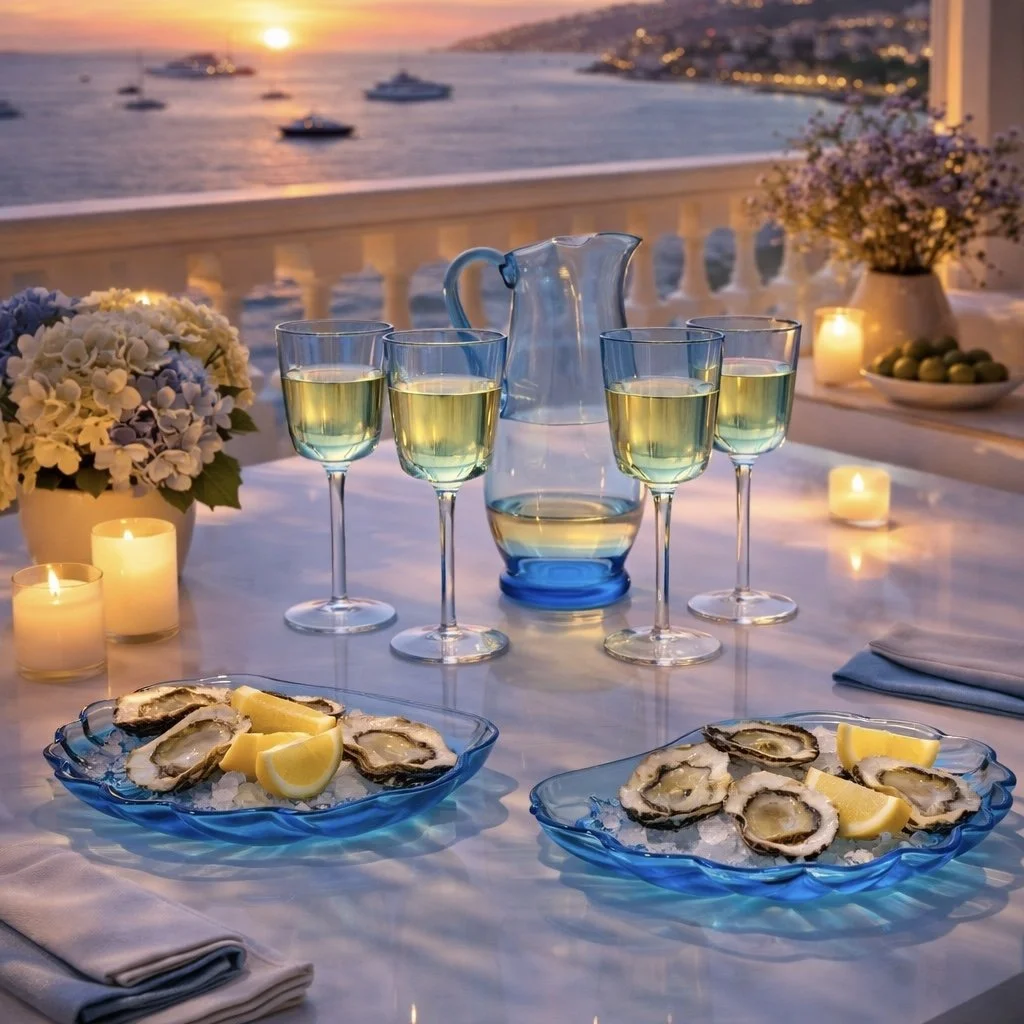
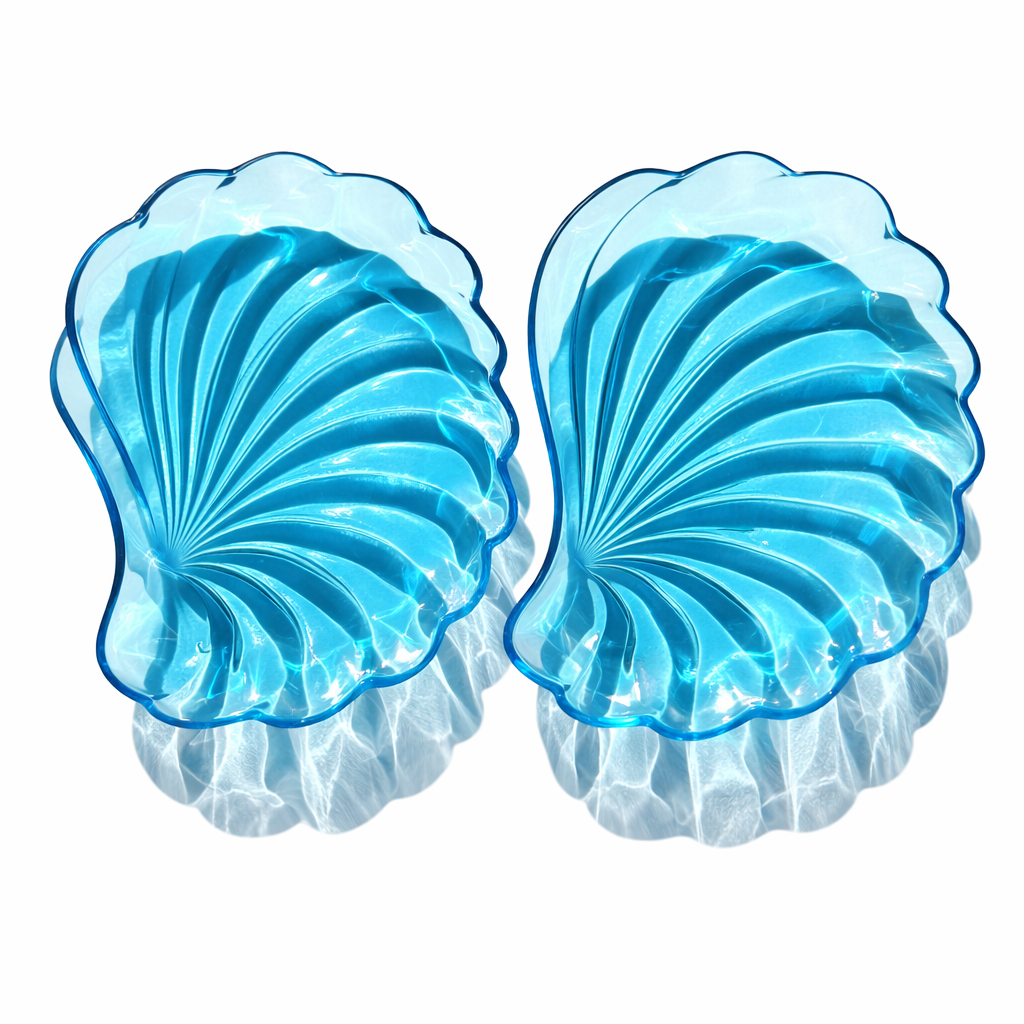
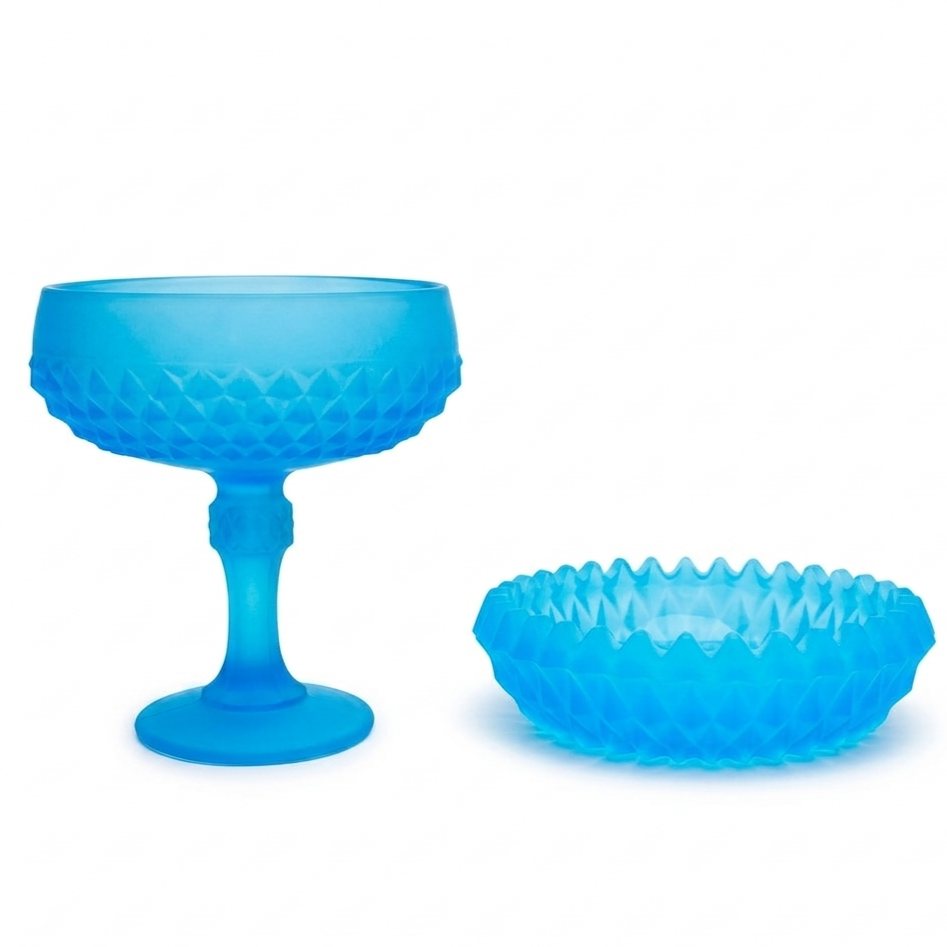
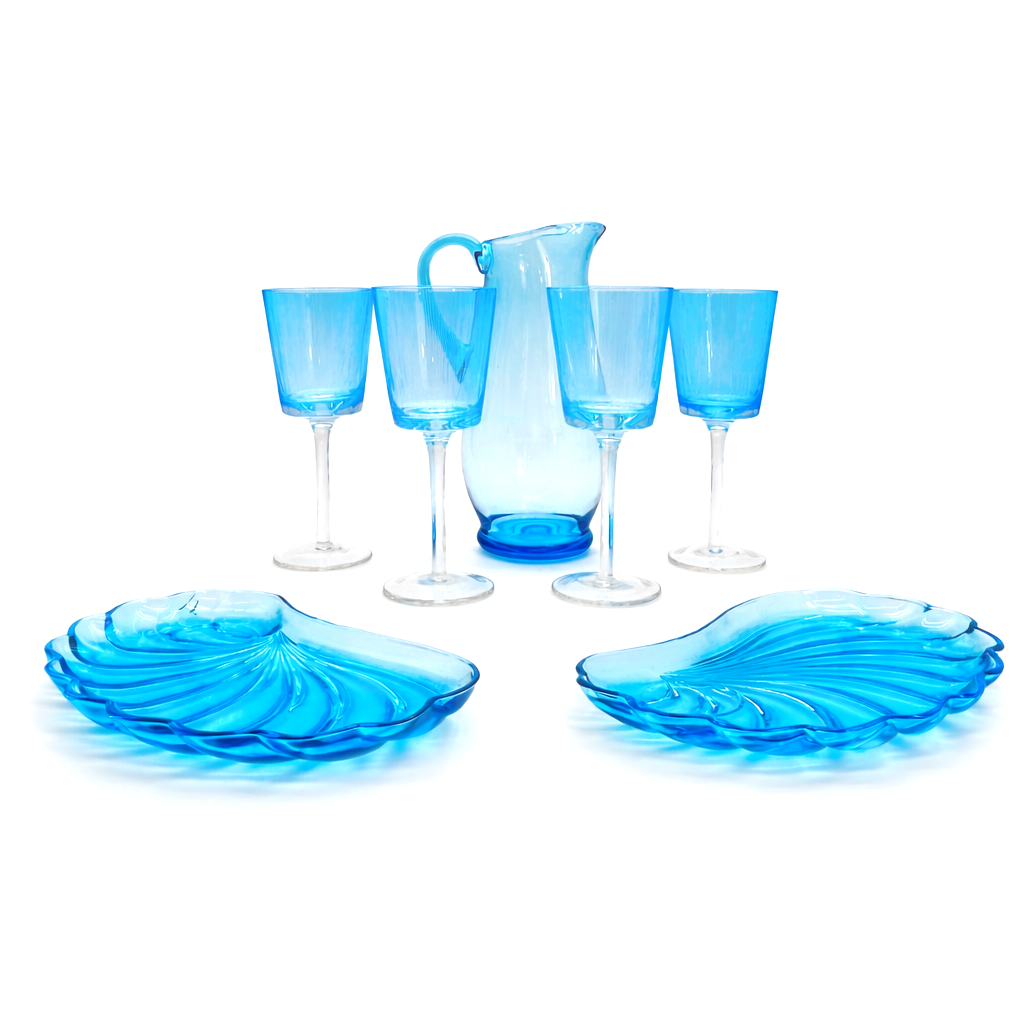
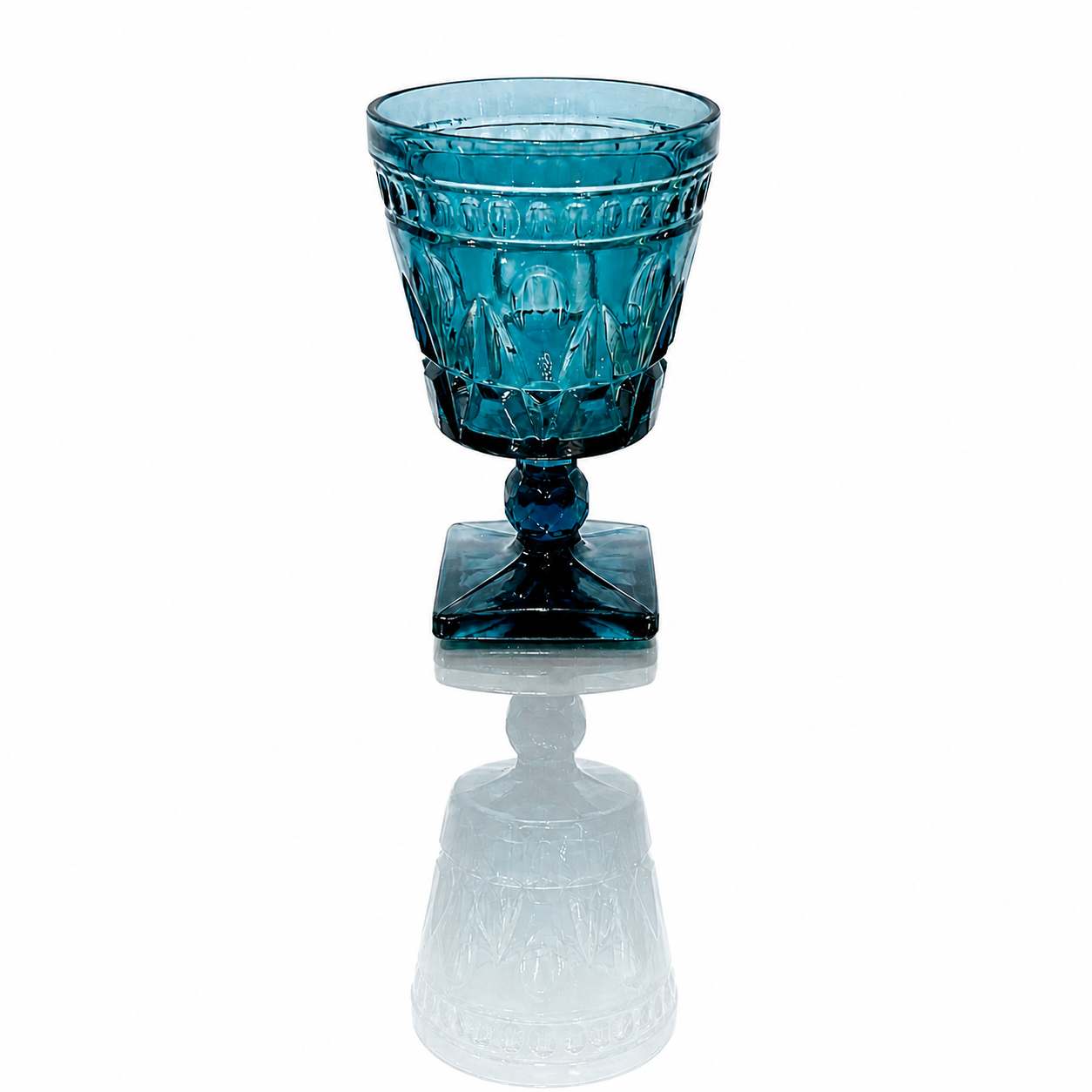
![Aquamarine Art Glass Service for 7]()
painterly yet precise.
-
![Hand-Painted Textural Set - Signed, NA, Poland]()
Sea-inflected elegance to any interiors,
-
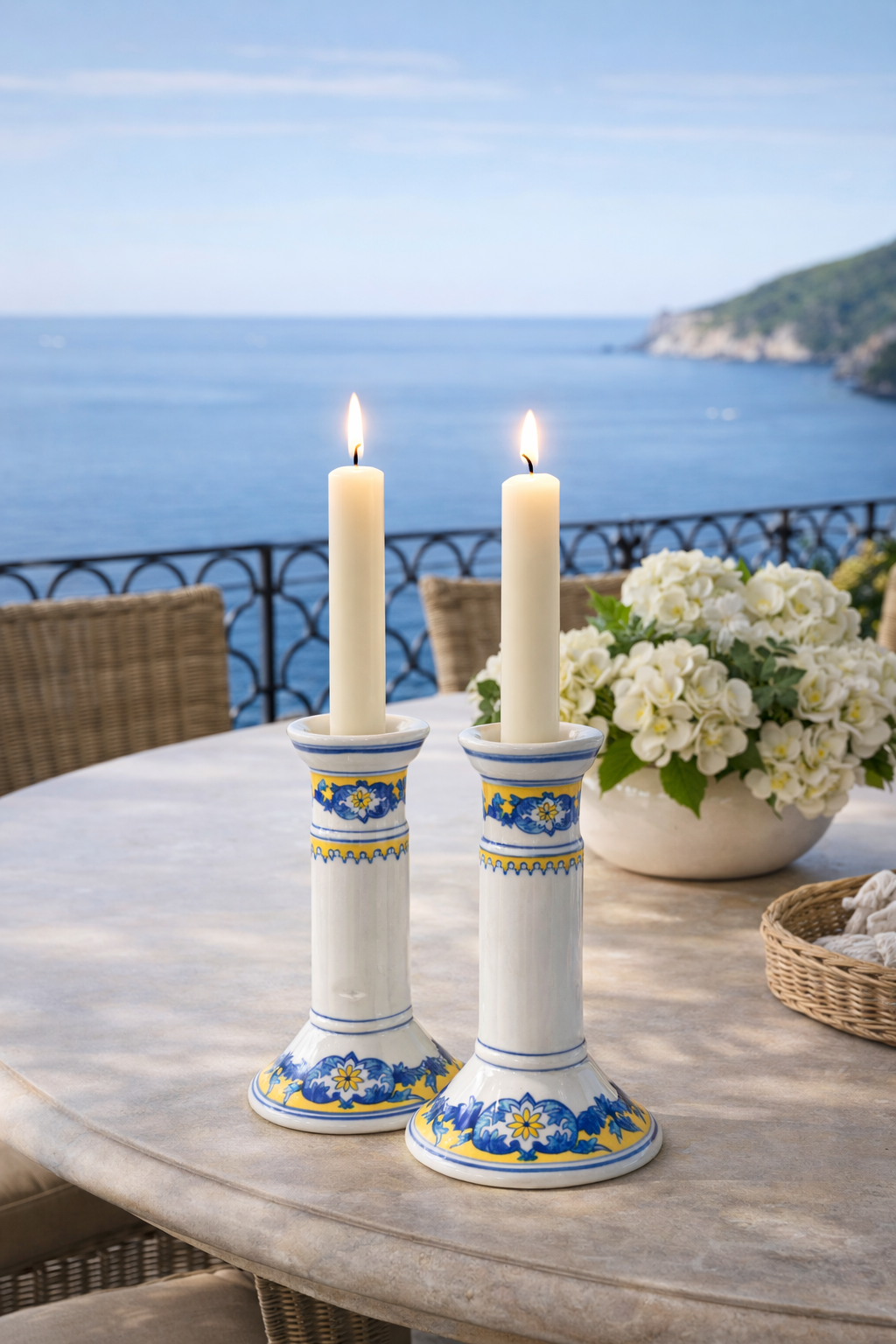
![Choisyle Roi Faience Candlesticks]()
THE SOCIAL TABLE: FORMAL ENTERTAINING
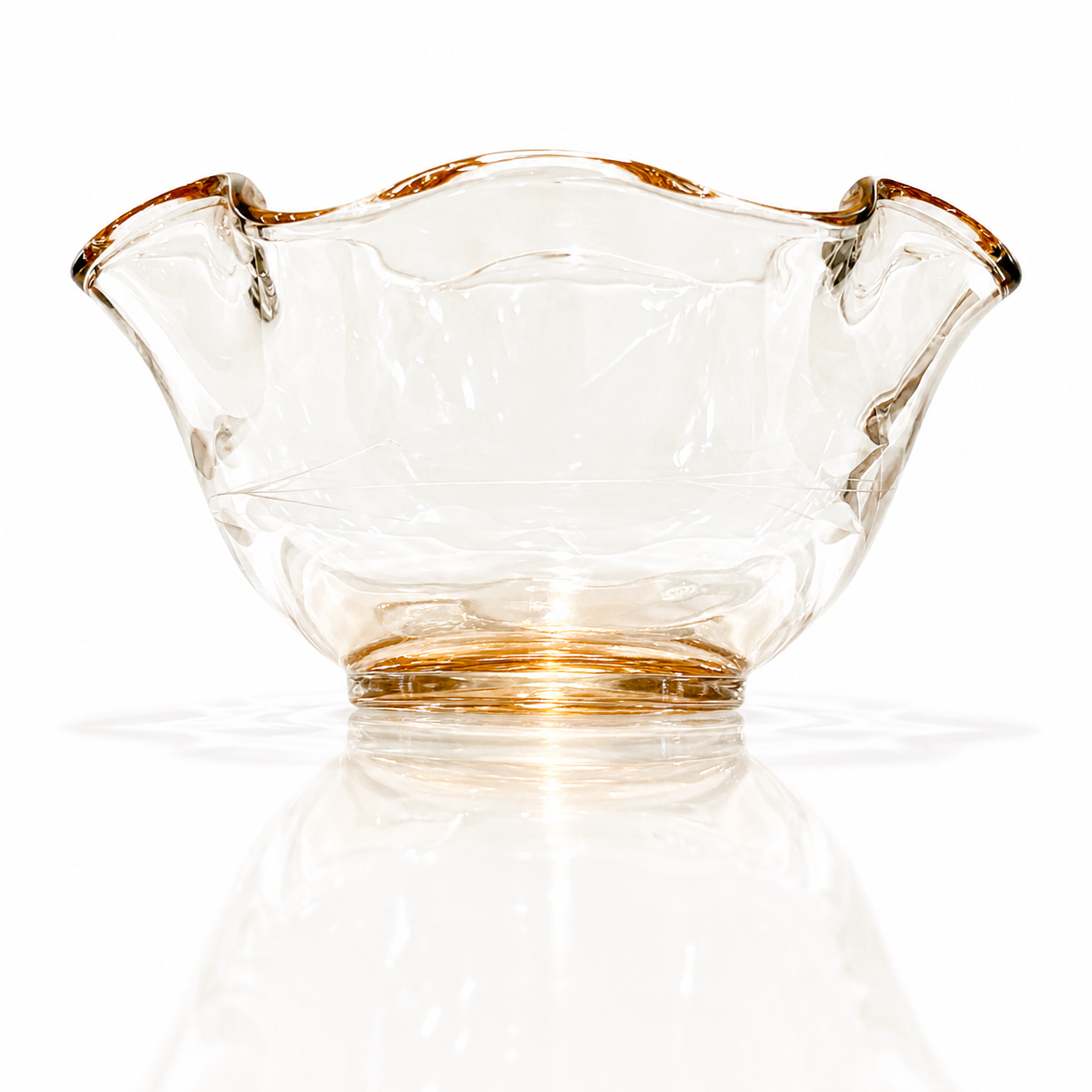
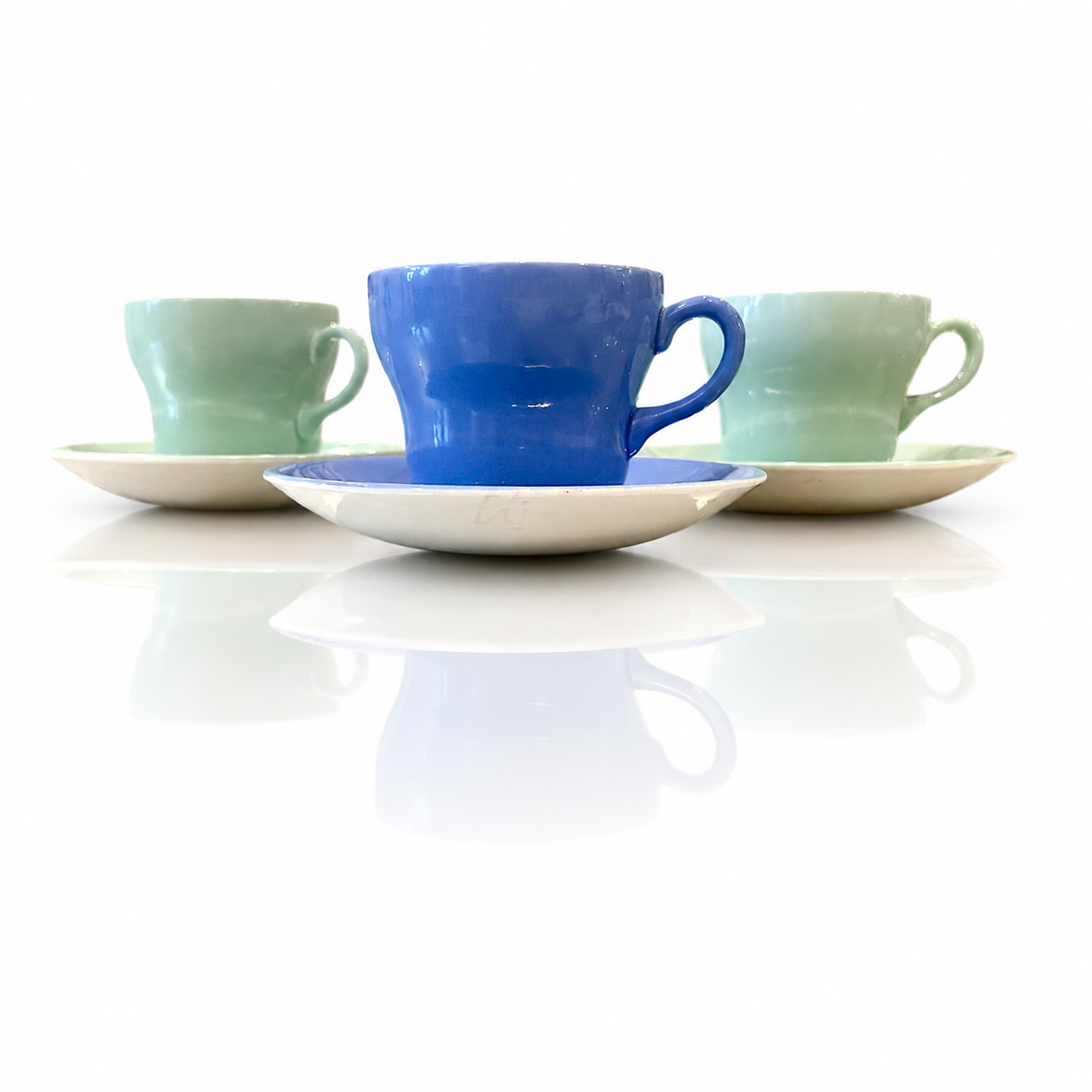
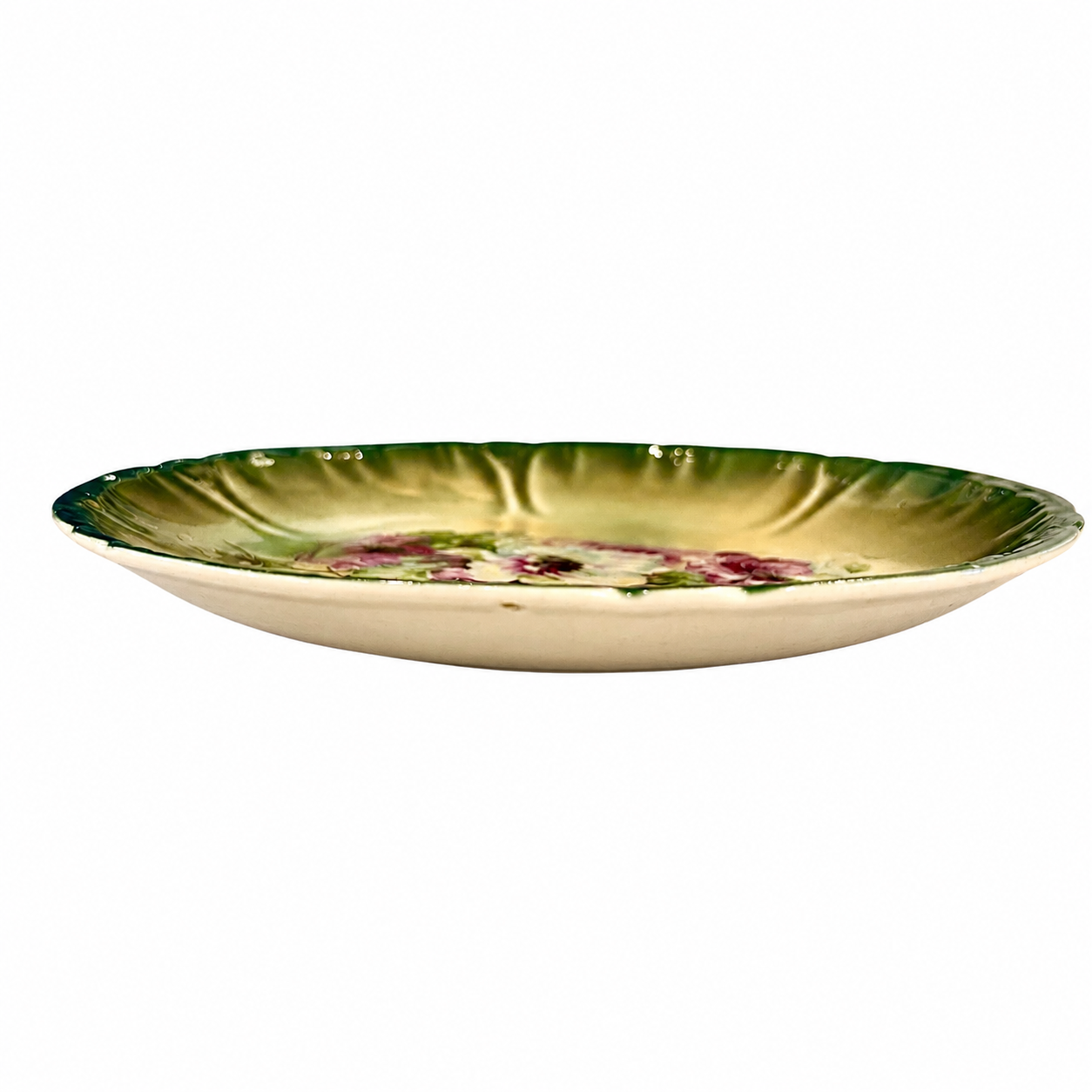
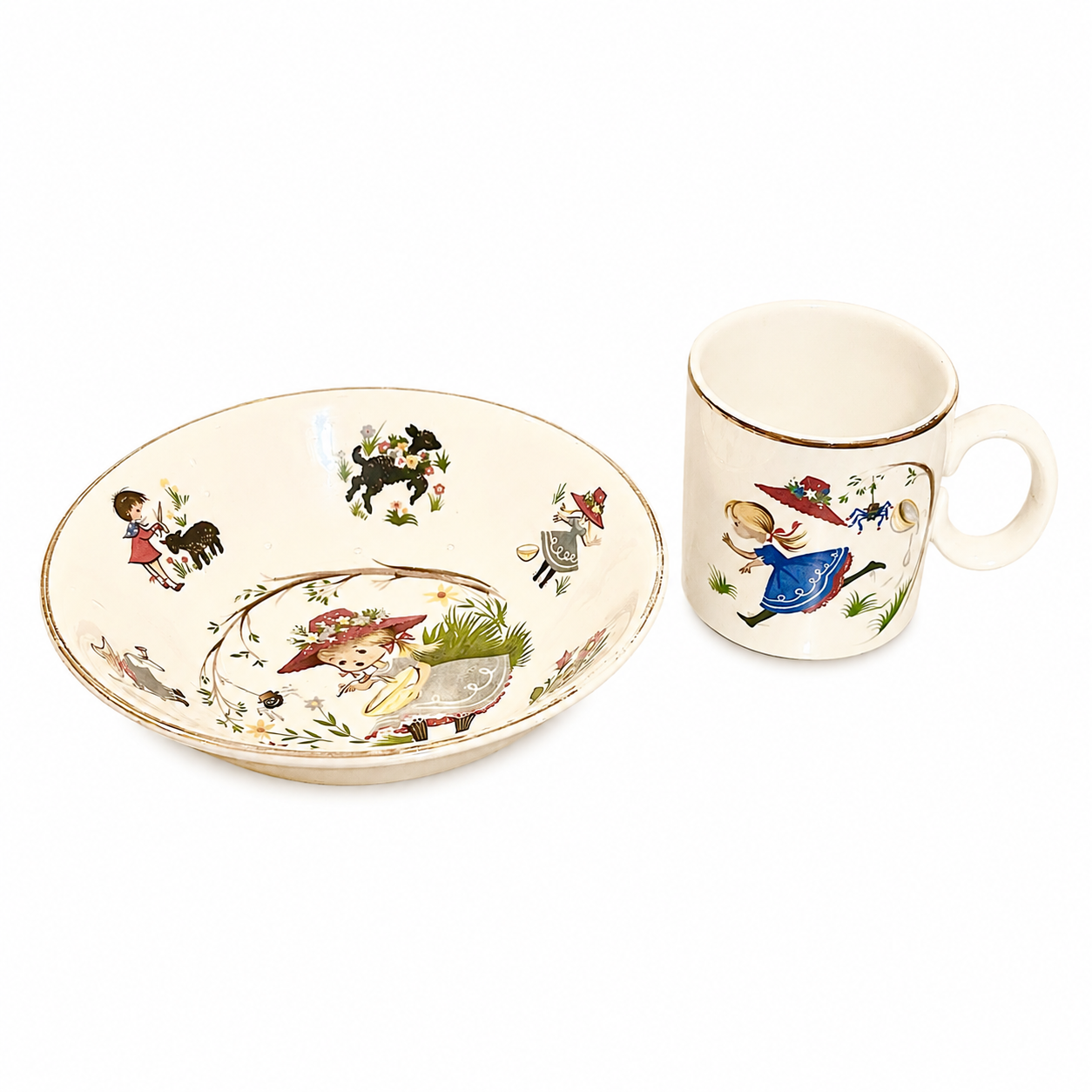
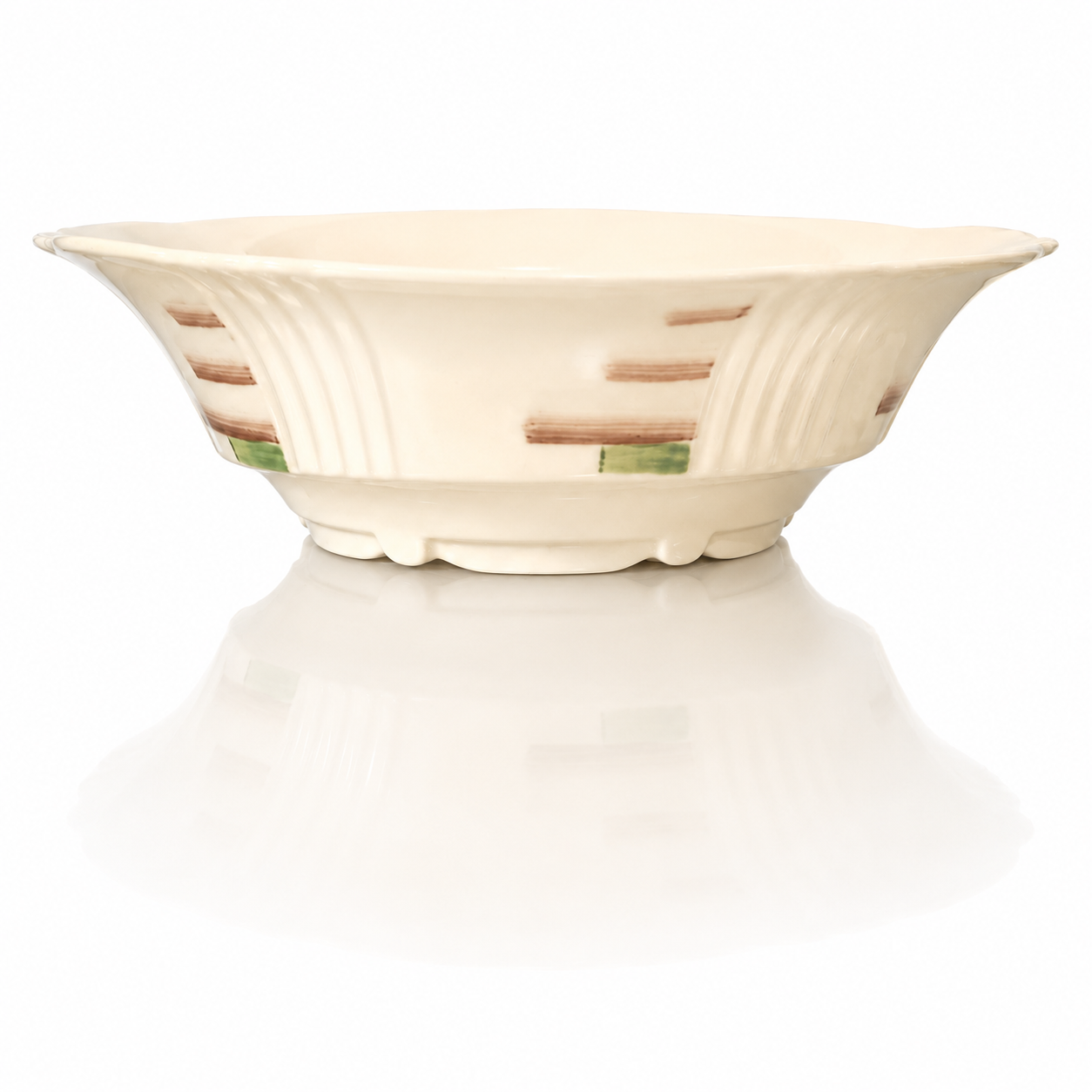
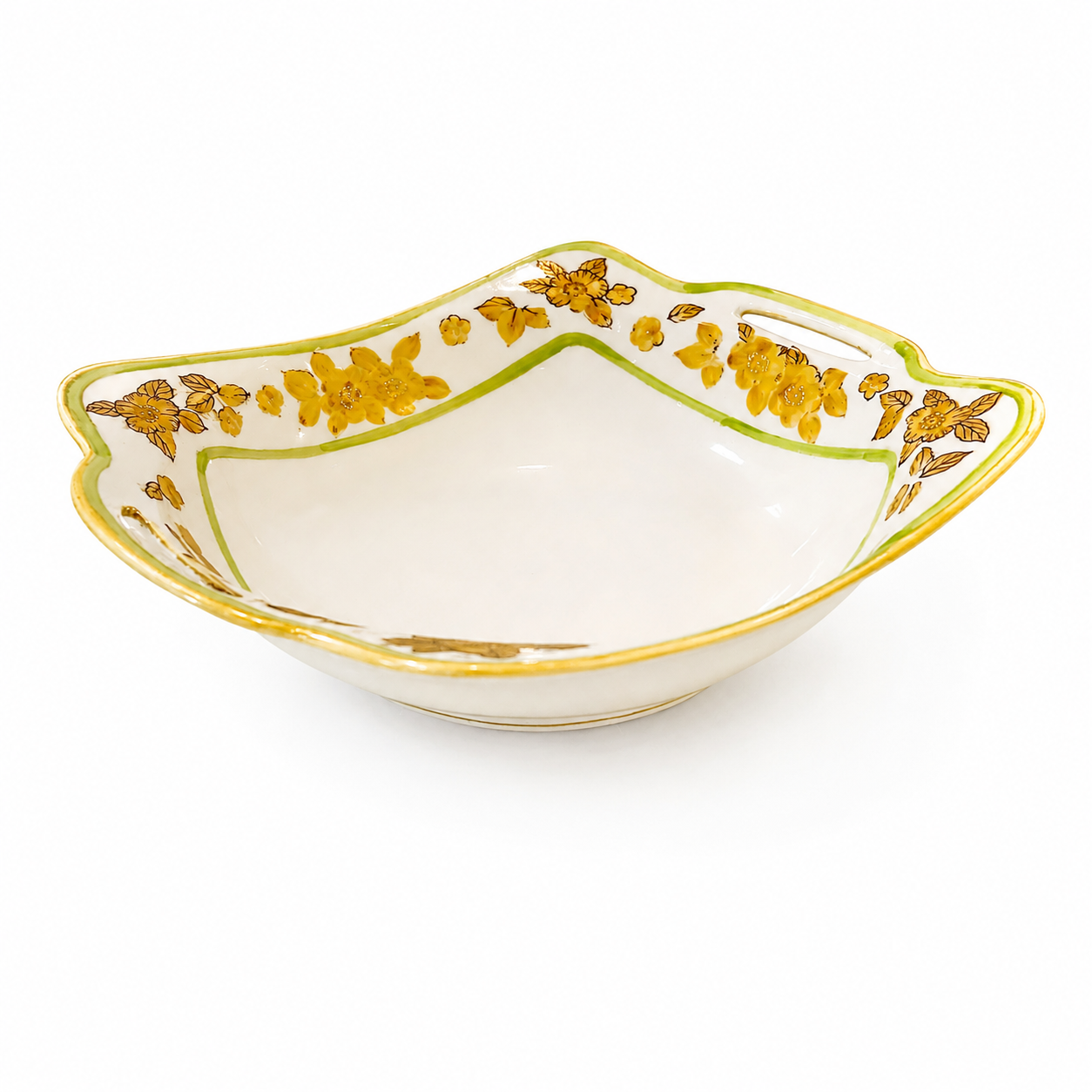
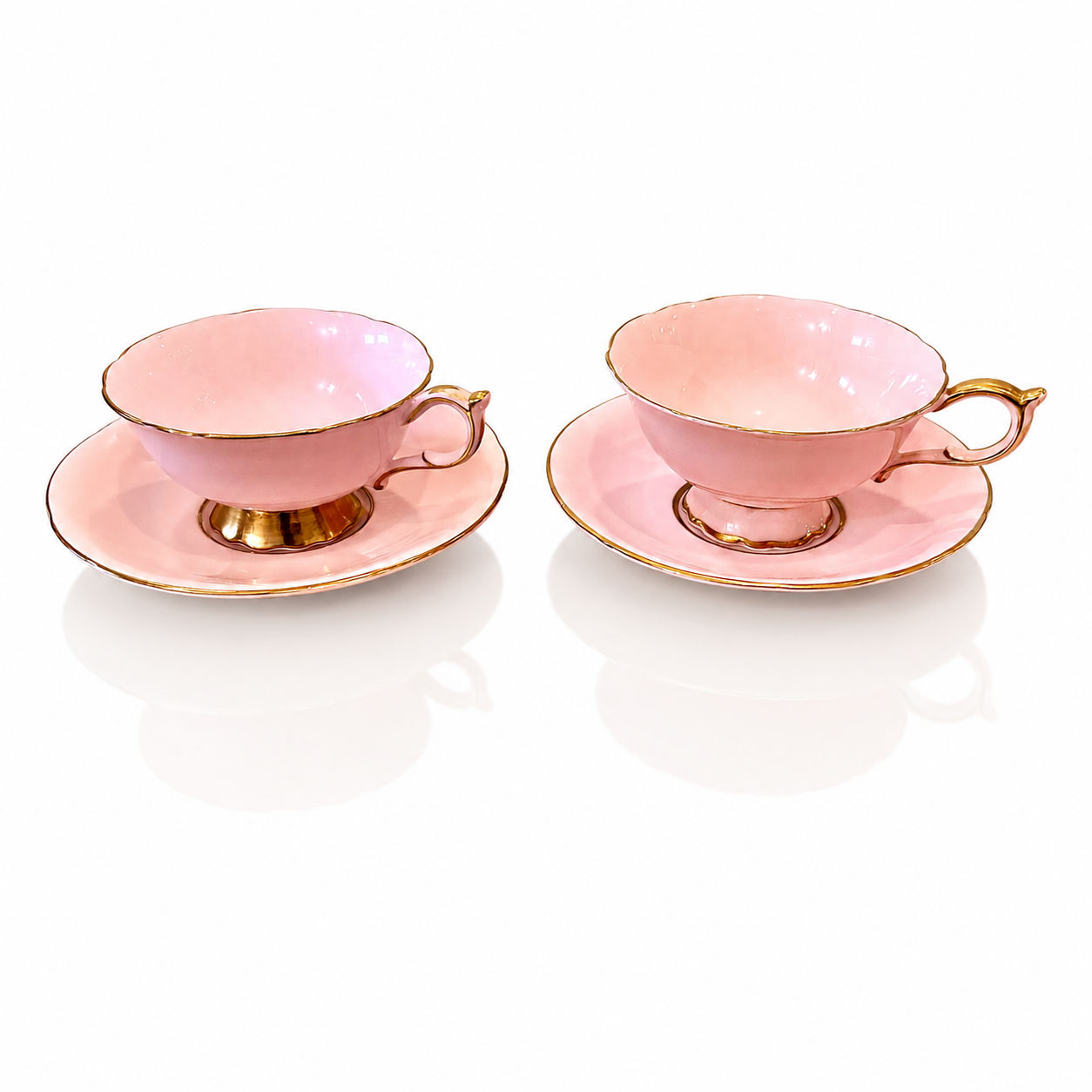
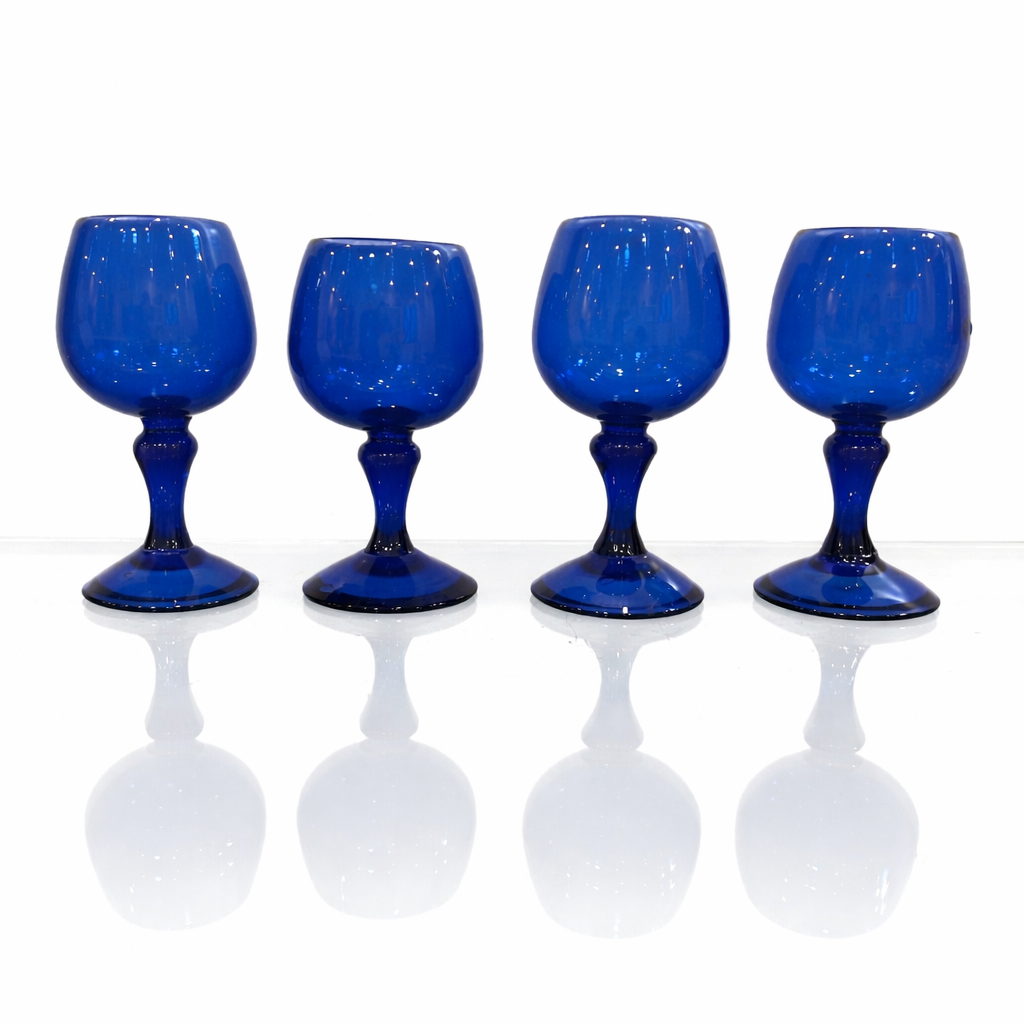
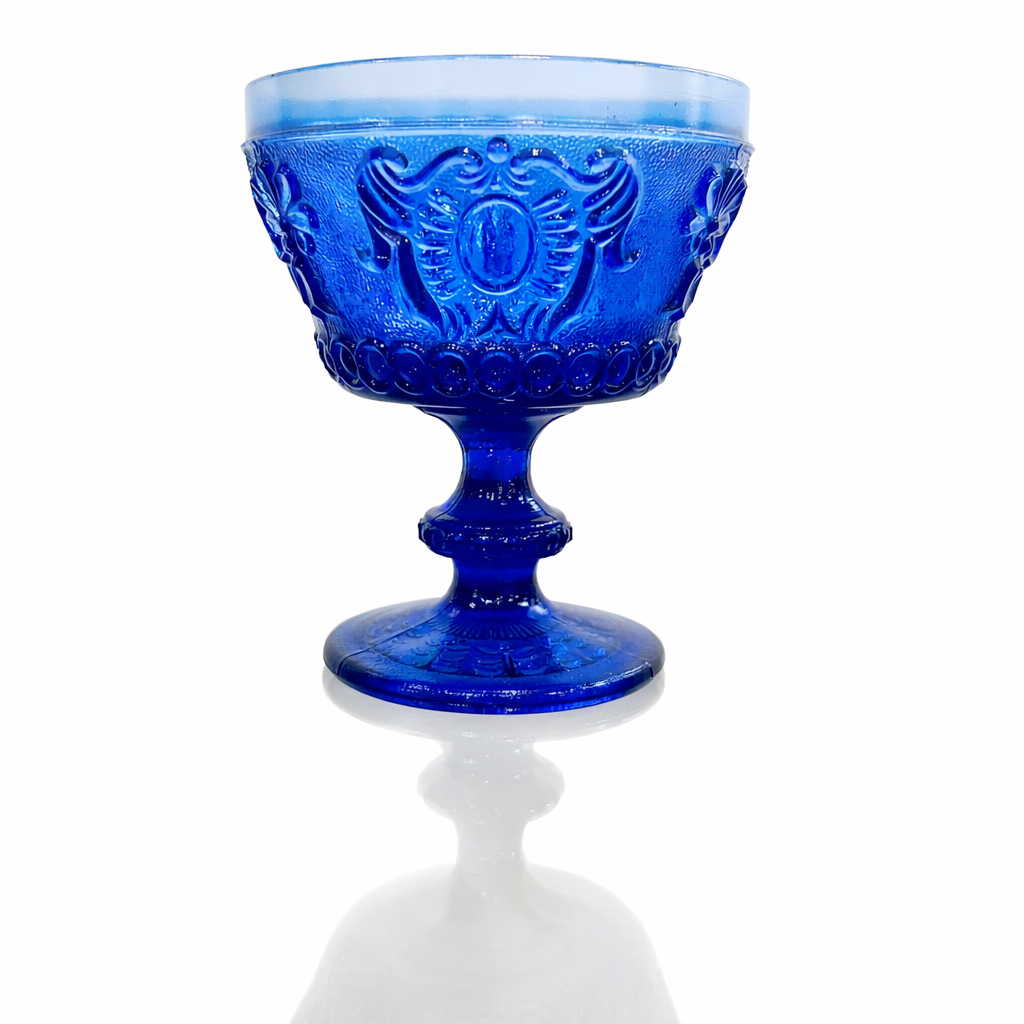
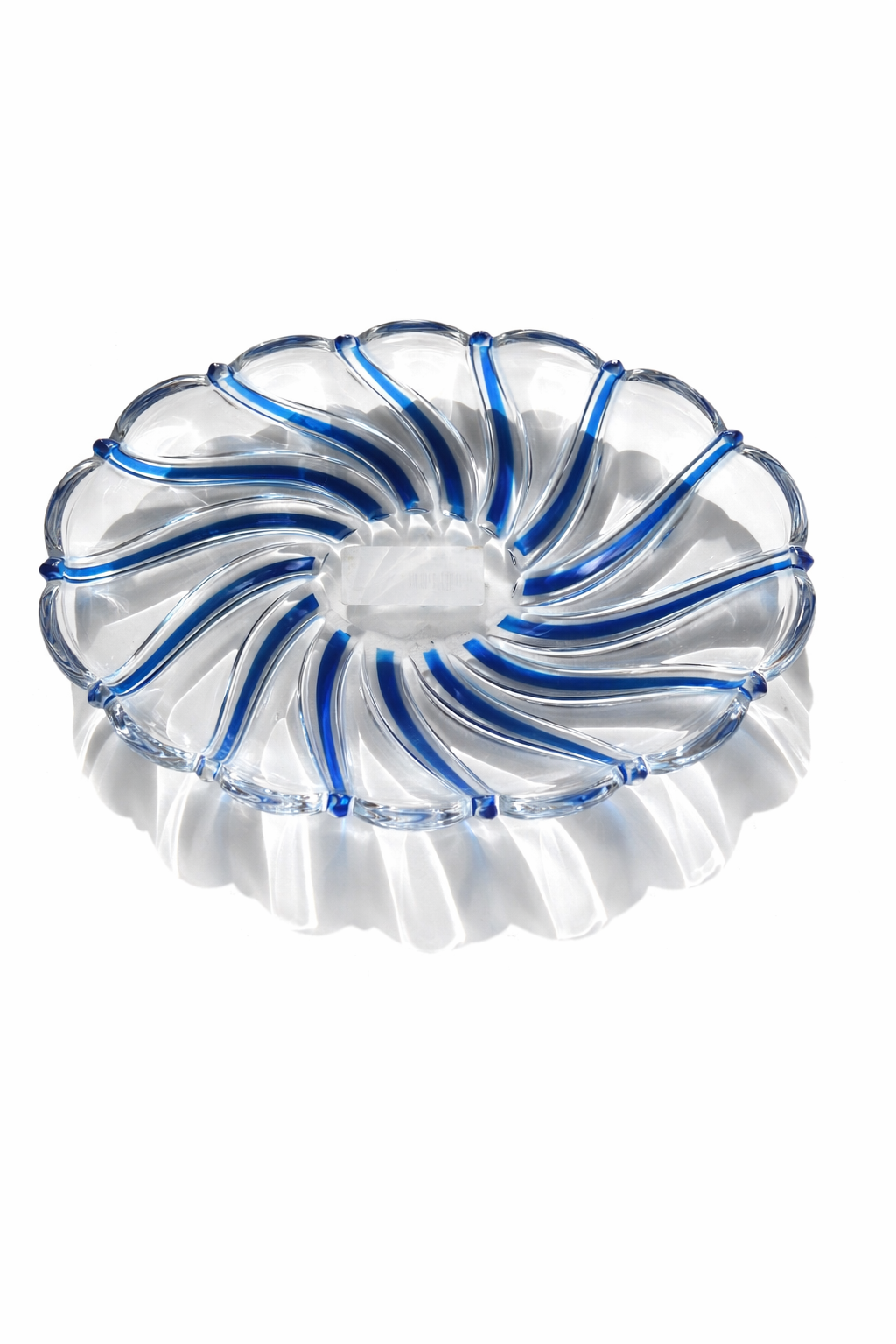
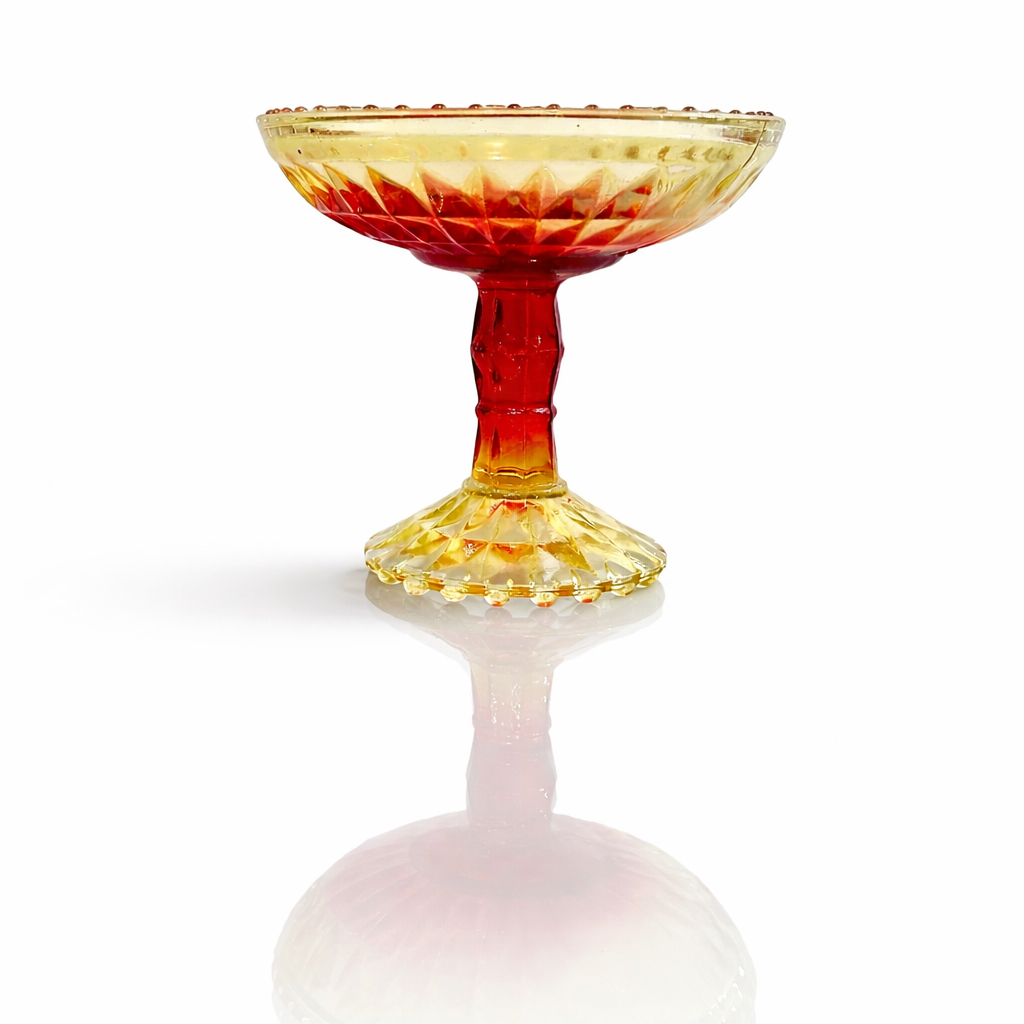
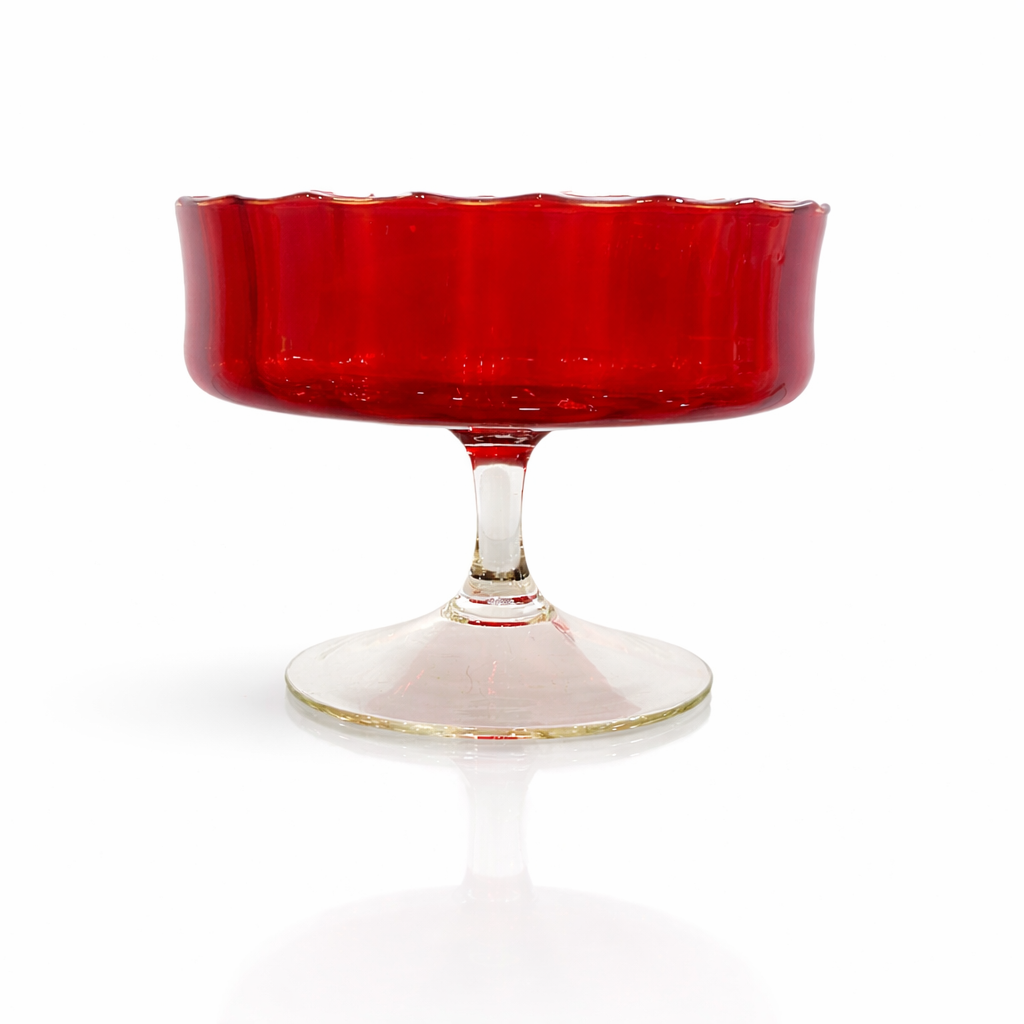
The Gift Altier
✧
The Gift Altier ✧
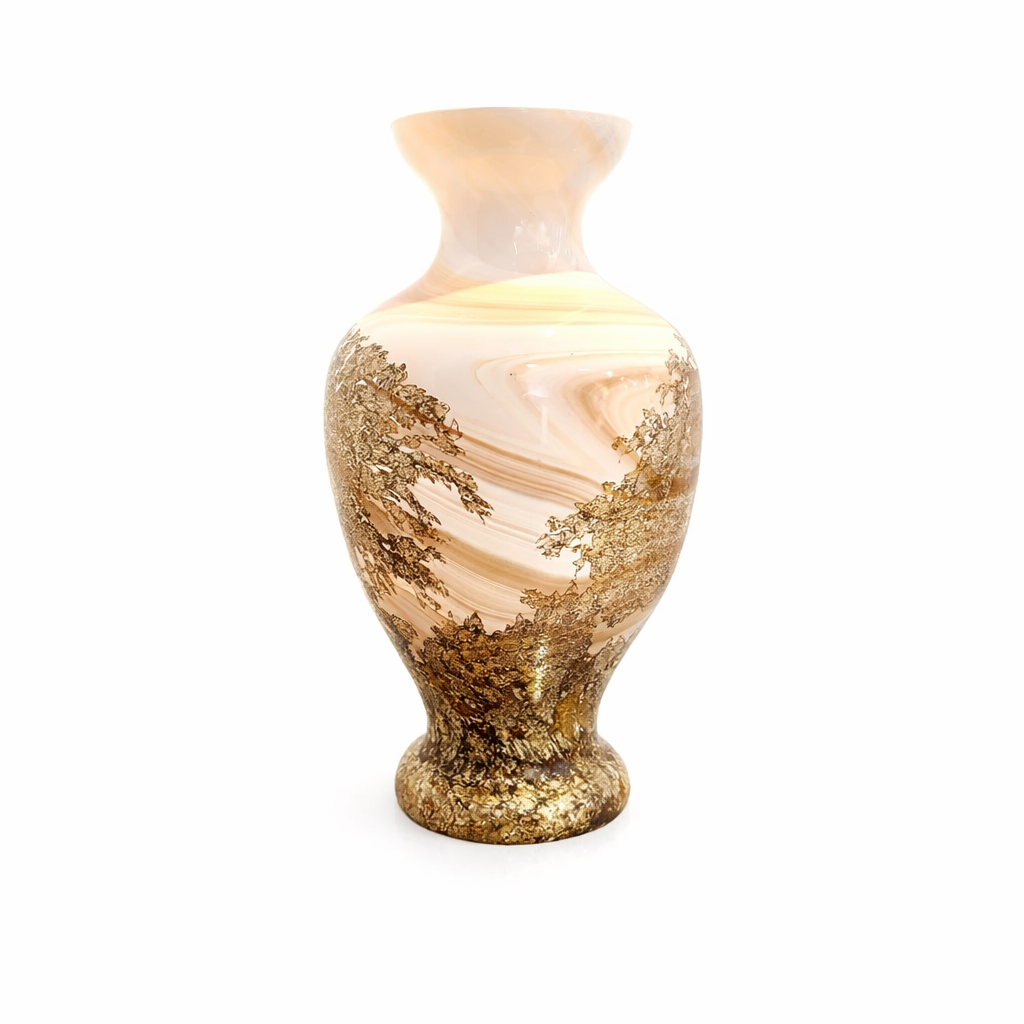
Collector-Grade Vintage European Art Glass Vase “R&D Glass Factory” (Poland) A striking hand-blown art glass vase by R&D Glass Factory, clearly labeled ”Hand Made - Poland, Europe.” This is a high-quality decorative piece produced during the late 20th century (circa 1980s-1990s), a period when Polish glassworks gained international recognition for their technical skill, rich coloration, and organic forms.
Attribution & Period
R&D Glass Factory (Poland) was part of the strong post-war Polish art glass tradition, influenced by Czech and Scandinavian studio glass movements. Their work is known for:
Skilled hand-blown construction
Thick, substantial glass
Natural, stone-like color patterns (often referred to as agate, onyx, or marbled glass)
Pieces were often exported to Western Europe and North America and are now actively collected.
Dimensions & Weight
Height: ~12 inches (30.5 cm)
Rim Diameter: ~5 inches (12.7 cm)
Base Diameter: ~4 inches (10.16 cm)
Condition
Excellent condition
No chips or cracks
Minor manufacturing characteristics consistent with hand-blown glass
Original R&D Glass Factory label intact, which significantly enhances collector value
Authenticity & Construction
Authentic labeled European studio glass
Increasingly collectible Polish art glass
Decorative yet substantial
displays exceptionally well
Comparable R&D and Polish studio vases continue to rise in value as supply dwindles
Material: Hand-blown art glass
Technique: Free-blown with layered, marbled coloration
Finish: High gloss with visible swirling striations and organic inclusions
Color Palette: Cream, blush, honey, brown, and earth tones with stone-like texture
Form: Classical baluster vase with flared rim and weighted foot The glass has excellent depth and translucency, with controlled internal movement;clear evidence of skilled furnace work rather than mass production.
Placement
This is not modern décor glass. It is true European studio work, made by hand, with weight, presence, and history, ideal for collectors of art glass, mid-century interiors, or European decorative arts.
STANDARD ATTRIBUTION & VALUE DISCLOSURE
This piece is described to the best of current scholarly and market knowledge. Any maker or regional attribution is based on visual analysis, materials, construction techniques, and documented stylistic comparisons. As with many mid-century and antique glass objects, definitive attribution may not be possible without original labels or factory records. Pricing reflects condition, quality, decorative appeal, and current collector demand rather than a guaranteed maker identification.
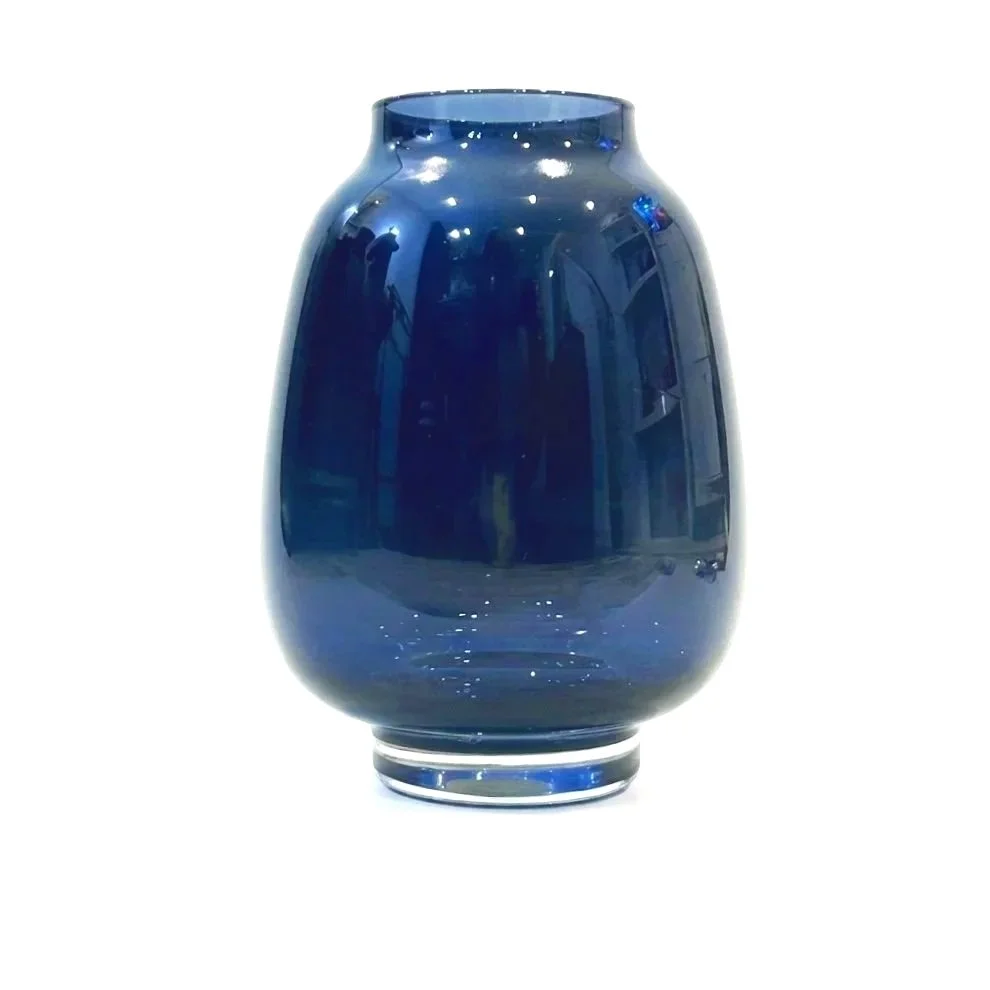
This striking vessel possesses a deep, saturated cobalt presence that commands attention through its substantial mass and light-trapping depth. The transition from the dense, midnight-blue body to the exceptionally thick, one-inch clear glass base creates a sophisticated optical lift, allowing the piece to appear as if it is hovering just above the surface. Its rounded, "belly" silhouette provides a generous canvas for light play, making it a compelling focal point for both minimalist and layered interior compositions.
Attribution & Period
Late 20th Century Polish Art Glass
The piece is a regional example of Polish glassmaking, confirmed by the original "Handmade in Poland" transparency label. Stylistically, the form is consistent with the mid-to-late 20th-century tradition of European cased glass, where weight and color saturation are prioritized over intricate surface decoration. The clean, fire-polished rim and the heavy, solid-cast base align with the high-quality export wares produced in the Krosno or Tarnowiec regions during the 1980s and 1990s.
Dimensions & Weight
Height: 8 inches
Width / Diameter: 6 inches (at widest point)
Depth / Base Diameter: 2 7/8 inches
Opening Diameter: 2 7/8 inches
Weight: 1.318 lbs
Condition
The vase is in excellent condition, appearing unused with no chips, cracks, or visible repairs. The glass remains remarkably clear with no clouding or internal "sickness." Minor, microscopic shelf wear may be present on the underside of the base, and characteristic small air bubbles (seeds) are trapped within the glass, inherent to the handmade blowing process.
Authenticity & Construction
This vessel was hand-blown using traditional furnace-working techniques, evidenced by the slight variations in glass thickness and the application of a thick, solid-glass "foot." The deep blue pigment is integrated into the melt rather than applied as a surface coating, ensuring a permanent, light-fast color. The contrast between the saturated body and the crystal-clear base highlights the artisan's control over heat and material viscosity.
Placement
The height and bold tonality of this piece make it an ideal candidate for a sun-drenched console table, a deep bookshelf, or as a central element in a professional office setting. It pairs exceptionally well with brushed brass accents, natural oak, or monochromatic marble surfaces.
STANDARD ATTRIBUTION & VALUE DISCLOSURE
This piece is described to the best of current scholarly and market knowledge. Any maker or regional attribution is based on visual analysis, materials, construction techniques, and documented stylistic comparisons. As with many MCM and antique design objects, definitive attribution may not be possible without original labels or factory records. Pricing reflects condition, quality, decorative appeal, and current collector demand rather than guaranteed maker identification.
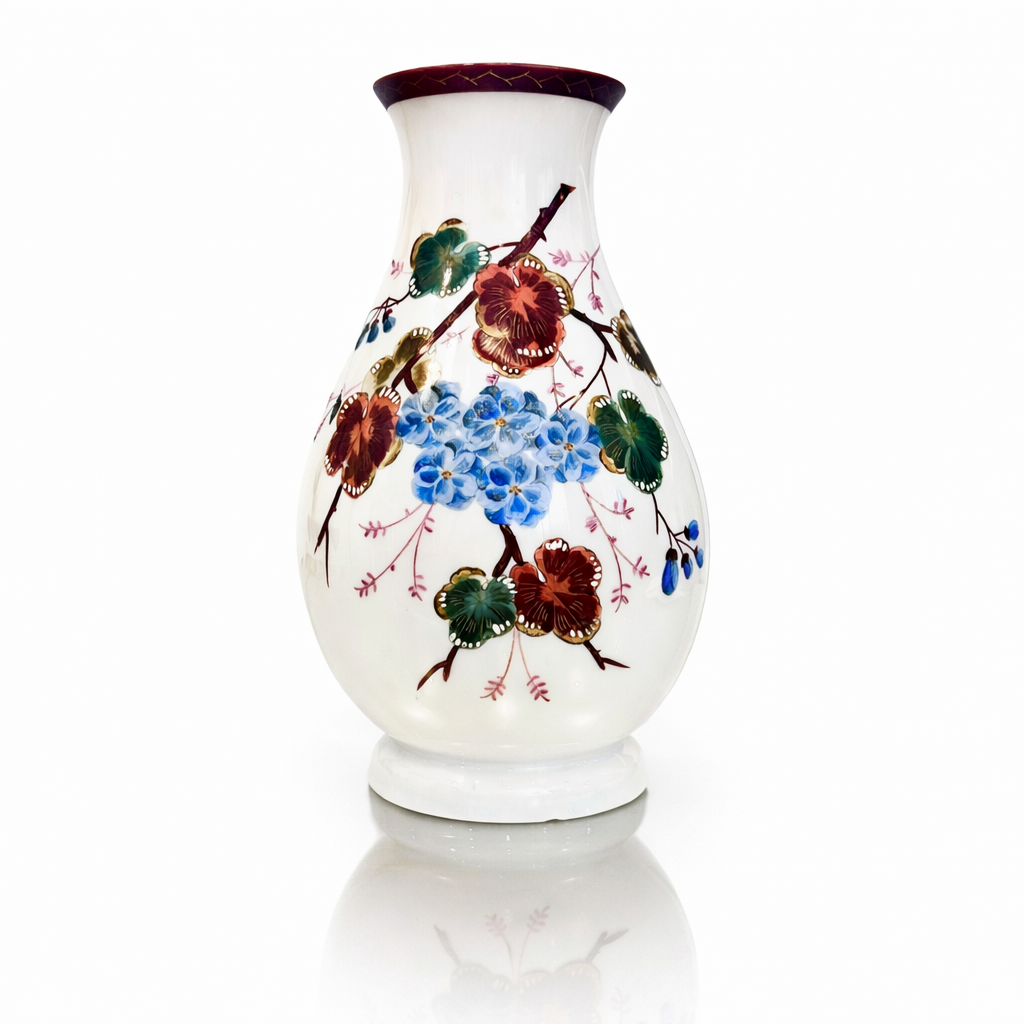
A softly luminous opaline glass vase distinguished by its rounded, sculptural body and gently flared neck, offering a refined balance between mass and delicacy. The surface is richly animated with hand-painted enamel florals in layered tones of cobalt, oxblood, and moss green, accented with raised white detailing that creates tactile depth and light-catching relief. The semi-translucent body diffuses light beautifully, giving the form a subtle inner glow. This piece reads as both decorative object and painterly surface, with strong presence on its own or within a curated grouping.
Attribution & Period
Unmarked decorative arts example, consistent with Bohemian (Czech) enamel-decorated opaline glass production, late 19th century (1880s). The milky opaline body, hand-applied enamel with raised dot accents, and naturalistic floral composition align closely with documented Bohemian export wares of the period. The polished pontil base and freehand decoration support hand-finished workshop production rather than later industrial manufacture. Attribution remains visual rather than documented due to absence of factory mark.
Dimensions & Weight
Height: 12 inches
Width / Diameter: 5.25 inches (widest belly)
Depth / Base Diameter: 4.25 inches (base), 4.25 inches (mouth)
Weight: 2.73 lbs
Condition
Good antique condition. Minor chip present along the base edge. Expected surface wear consistent with age, including light scuffing and base wear. Enamel decoration remains largely intact with minor losses and wear visible under close inspection. No major cracks or structural damage observed.
Authenticity & Construction
Hand-blown opaline glass body with hand-applied enamel decoration. The raised enamel work indicates multiple firing stages, a hallmark of 19th-century Bohemian decorative glass. The ground and polished pontil on the base confirms traditional finishing methods. The slight irregularities in form and brushwork further support hand production.
Placement
Ideal as a standalone sculptural accent on a console, mantel, or pedestal. Works particularly well in layered interiors incorporating European decorative arts, antique ceramics, or soft-toned palettes. Its scale and visual density allow it to anchor a vignette without overwhelming surrounding elements.
STANDARD ATTRIBUTION & VALUE DISCLOSURE; This piece is described to the best of current scholarly and market knowledge. Any maker or regional attribution is based on visual analysis, materials, construction techniques, and documented stylistic comparisons. As with many MCM and antique design objects, definitive attribution may not be possible without original labels or factory records. Pricing reflects condition, quality, decorative appeal, and current collector demand rather than guaranteed maker identification.
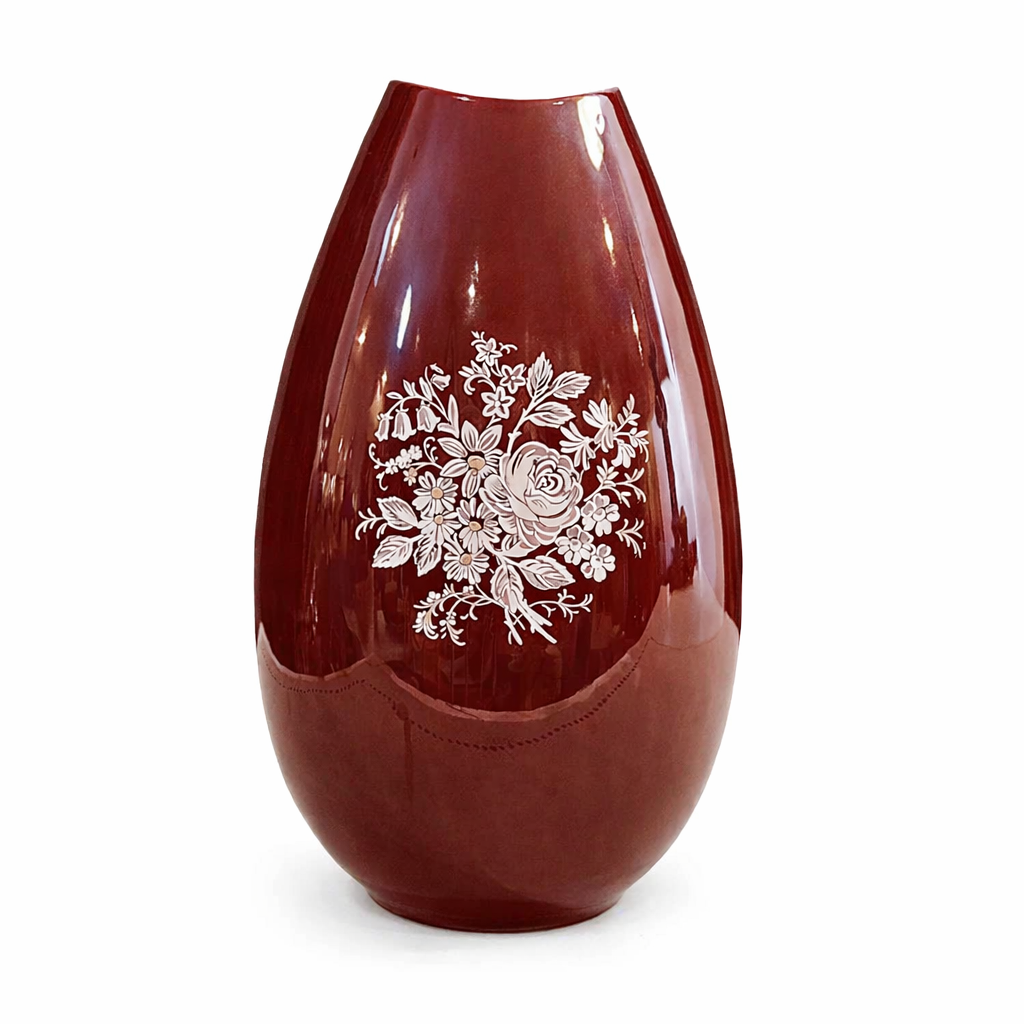
An exceptional signed Sharon art pottery vase, a striking example of mid-20th-century American studio ceramics. This piece features a rich high-gloss oxblood / chocolate brown glaze contrasted with a hand-painted white floral bouquet accented in soft gold, executed in a refined, traditional decorative style.
Attribution & Period
The base is clearly incised Sharon, executed before firing. This signature is consistent with Sharon Art Pottery / Sharon Studio Pottery, a name associated with American regional studio ceramics active primarily in the mid-20th century, often linked by collectors to Ohio and Pennsylvania studio traditions. Pieces bearing this mark are uncommon, especially in this size, condition, and decorative quality.
Provedence
The floral decoration is hand-painted, not transferware. Fine linework, layered petals, and subtle gold detailing indicate a trained decorator rather than factory output. The bouquet compositionroses, bell flowers, and filler floralsreflects traditional European influences interpreted through American studio practice, a style popular with skilled studio potters from the 1940s1960s.
Condition
Excellent vintage condition No cracks, chips, or repairs observed Minor glaze pooling and kiln marks to base consistent with hand-crafted origin Interior clean and intact
Authenticity & Construction
Signed Sharon pottery does not appear frequently on the market, and floral-decorated examples are significantly rarer than plain glaze forms.
The vase is hand-thrown, with a balanced ovoid form tapering gently toward the neck. The lower section reveals an intentionally exposed clay body beneath the glaze line, a hallmark of skilled studio work and controlled firing.
The glaze exhibits depth, movement, and natural variation consistent with art pottery rather than mass production.
Placement
This vase sits firmly in the category of decorative art pottery collectible, not utilitarian ware. This is a display-quality piece suitable for: Serious studio pottery collectors Mid-century American ceramics collections Interior designers sourcing authentic vintage statement objects
Dimensions & Weight
STANDARD ATTRIBUTION & VALUE DISCLOSURE
This piece is described to the best of current scholarly and market knowledge. Any maker or regional attribution is based on visual analysis, materials, construction techniques, and documented stylistic comparisons. As with many vintage and antique glass objects, definitive attribution may not be possible without original labels or factory records. Pricing reflects condition, quality, decorative appeal, and current collector demand rather than a guaranteed maker identification.
Rare
Attribution & Period
Attribution: Attributed to Barovier & Toso (or Seguso Vetri d'Arte / Archiminio), Murano, Italy
Period: Mid-20th Century (c. 1950s- 1960s)
Design/Technique: Hand-blown iridized glass with sculptural radial ribs (a costolature)
Dimensions & Weight
Dimensions: TBD (Buyer/Dealer to update exact diameter and depth upon physical verification)
Weight: TBD (Buyer/Dealer to update exact total weight upon physical verification)
Condition
Overall Condition: Excellent vintage condition.
Details: Free of structural cracks, major chips, or restored areas. Shows subtle light hand-crafting imperfections and minor micro-surface wear consistent with age, authentic hand-blown glass production, and delicate domestic handling.
Authenticity & Construction
Technique: Free-blown and molded clear soda-lime art glass treated with a metallic chloride spray application while hot, achieving a permanent, oil-slick iridized prism refraction across the relief surface.
Architectural & Form Details: Features deep concentric fluting emanating from a sunken centerwell, terminating in a broad halo rim. The underside displays polished ground pontils and structural foot rings, confirming artisanal hand-finished production.
Placement
An exceptional set for high-end residential interiors, curated dining environments, or contemporary hospitality spaces. Ideal as decorative accent wall mounts, display cabinet features, or elevated tabletop layering pieces for bespoke entertaining.
Provenance
Private Collection / Acquired from a private estate.
STANDARD ATTRIBUTION & VALUE DISCLOSURE: This piece is described to the best of current scholarly and market knowledge. Any maker or regional attribution is based on visual analysis, materials, construction techniques, and documented stylistic comparisons. As with many vintage and antique glass objects, definitive attribution may not be possible without original labels or factory records. Pricing reflects condition, quality, decorative appeal, and current collector demand rather than a guaranteed maker identification.